


In embracing the theme “Better, Not Perfect,” PMQ’s deTour eschews unrealistic utopian ideals in favour of a grounded, problem-focused approach to design. Its subtitle, “Prototypes for Tomorrow,” suggests innovations within reach, rooted in the world we inhabit. Tellingly, one of its three zones is even entitled “The IRL Field” — in real life. “I believe that design resolves problems, design has to be somehow tangible,” says that section’s curator, Dennis Cheung, a designer known for his recent work with bamboo. His six selections each showcase creatives devoted to materials: from woodcarving and woodturning to recycled plastics and sponge.
Yet, in its showcase of creatives from Hong Kong and beyond, PMQ’s annual celebration of design is not lacking in ambition. “This show is a little bit of an experiment,” says Chilai Howard, curator of The Future Track section, which gathers two large-scale installations. Compared with the “very traditional” approach of mainstream European design exhibits, deTour shows how Hong Kong “can be more contemporary, more experimental, and more useful as well.”
As co-curators of The Concept Lab, Aron Tsang and Wesley Ho zeroed in on everyday functionality — objects from jewellery to homeware that might change your day, if not your life. The six creatives they spotlight share “a new idea or question that transforms the original function, form, or even materials of the objects that we are very familiar with,” says Ho. The goal? “It triggers the public [to consider] what design could be.”
Upcycling across the urban landscape
Perhaps best capturing deTour’s pragmatic ethos of embracing imperfection is “Second Rain,” a calming installation demonstrating how water dripping from air conditioning units could be collected, cooled and pumped back out as scented air mist — turning an everyday nuisance that creator Honmi calls “city juice” into a cooling mist for pedestrians. Practical, sustainable and also a social leveller — those huddled in comfort indoors no longer dripping waste on those forced outside, but sharing a cool breeze with the world. “It raises a bigger statement: that it is possible to create a device that we can place in the city that will turn an undesirable phenomenon into something that is desirable,” says Tsang.
Also turning waste into something useful is the Hong Kong Glaze Research Lab, which developed a way to repurpose incense ash from temples in ceramic glazes. “We looked for this secondary waste as a source of raw material,” says co-founder Calvin Chan. “The ash is already there. It’s ready to use. It’s not rubbish.” Chan personally collects the still-hot embers from Kwun Yum Tong, a nearby temple in Sheung Wan. Temple staff welcome the idea, but have “no idea what we’re doing,” he admits. Their exhibit, “From waste to glaze, an urban alchemy,” traces the development of a glaze now used on the team’s vases and utensils, as well as tiles for commercial projects.
-
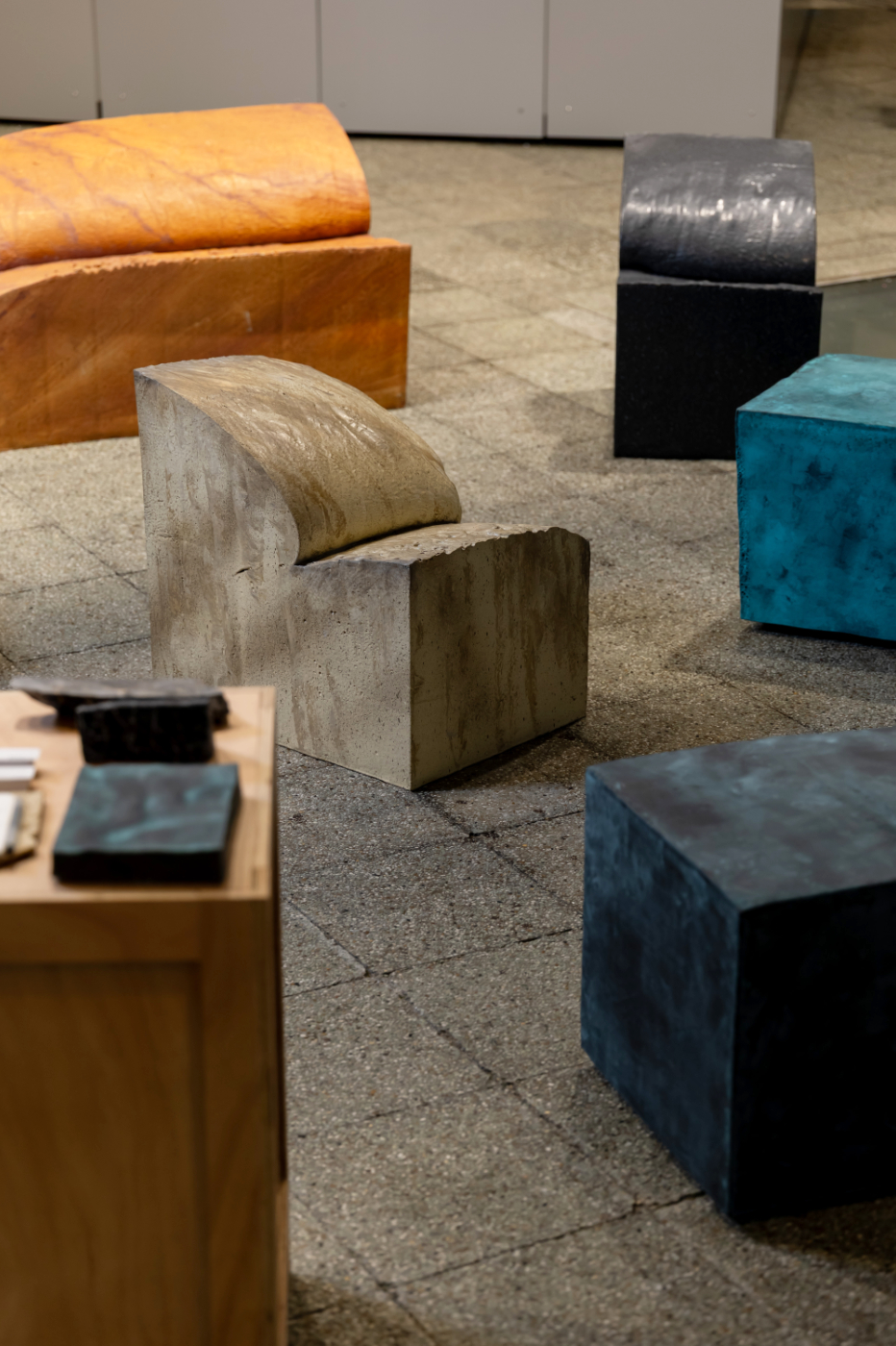
- “Tofu” by IAMMI
-
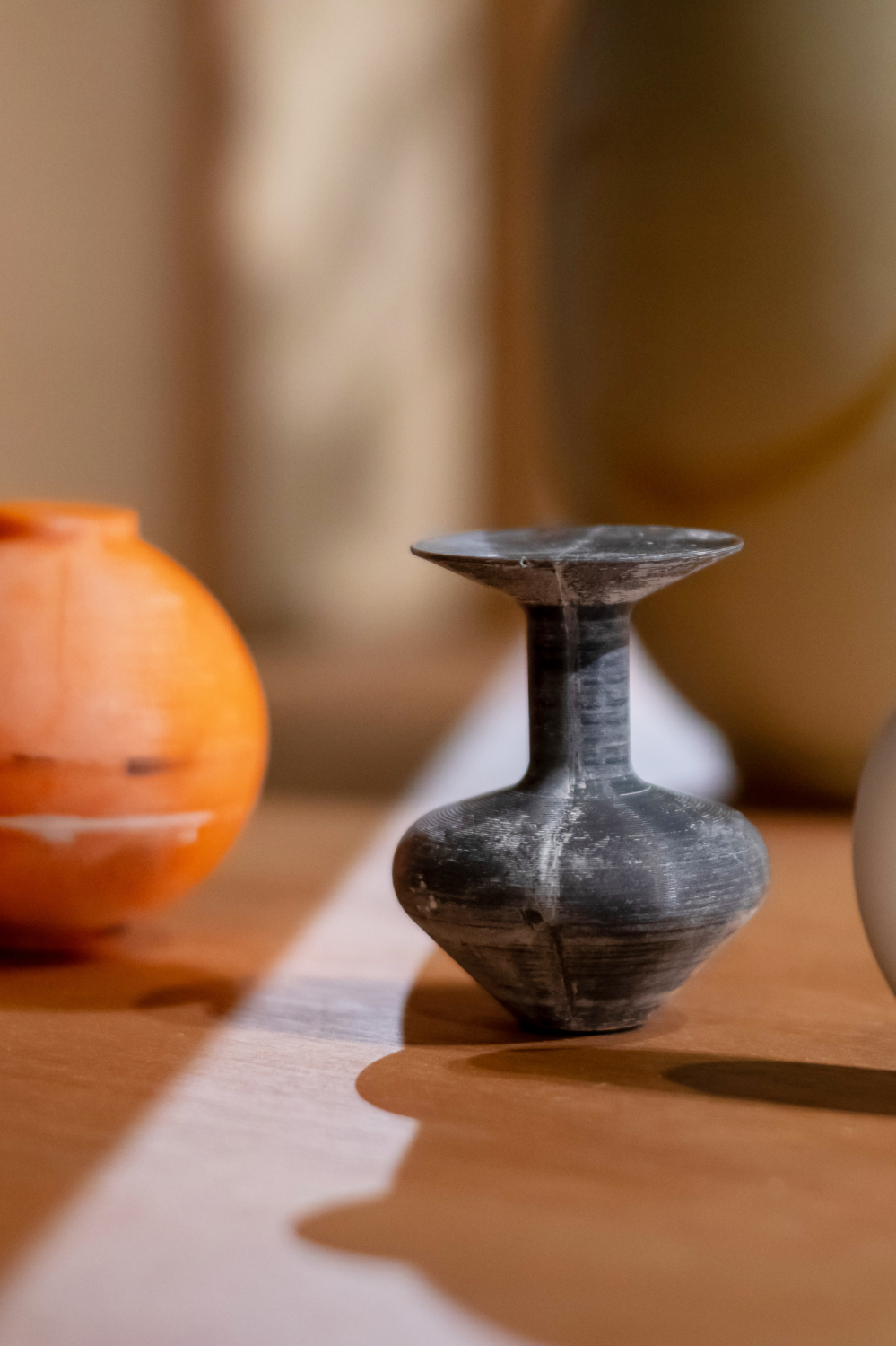
- “From waste to glaze, an urban alchemy” by Hong Kong Glaze Research Lab
-
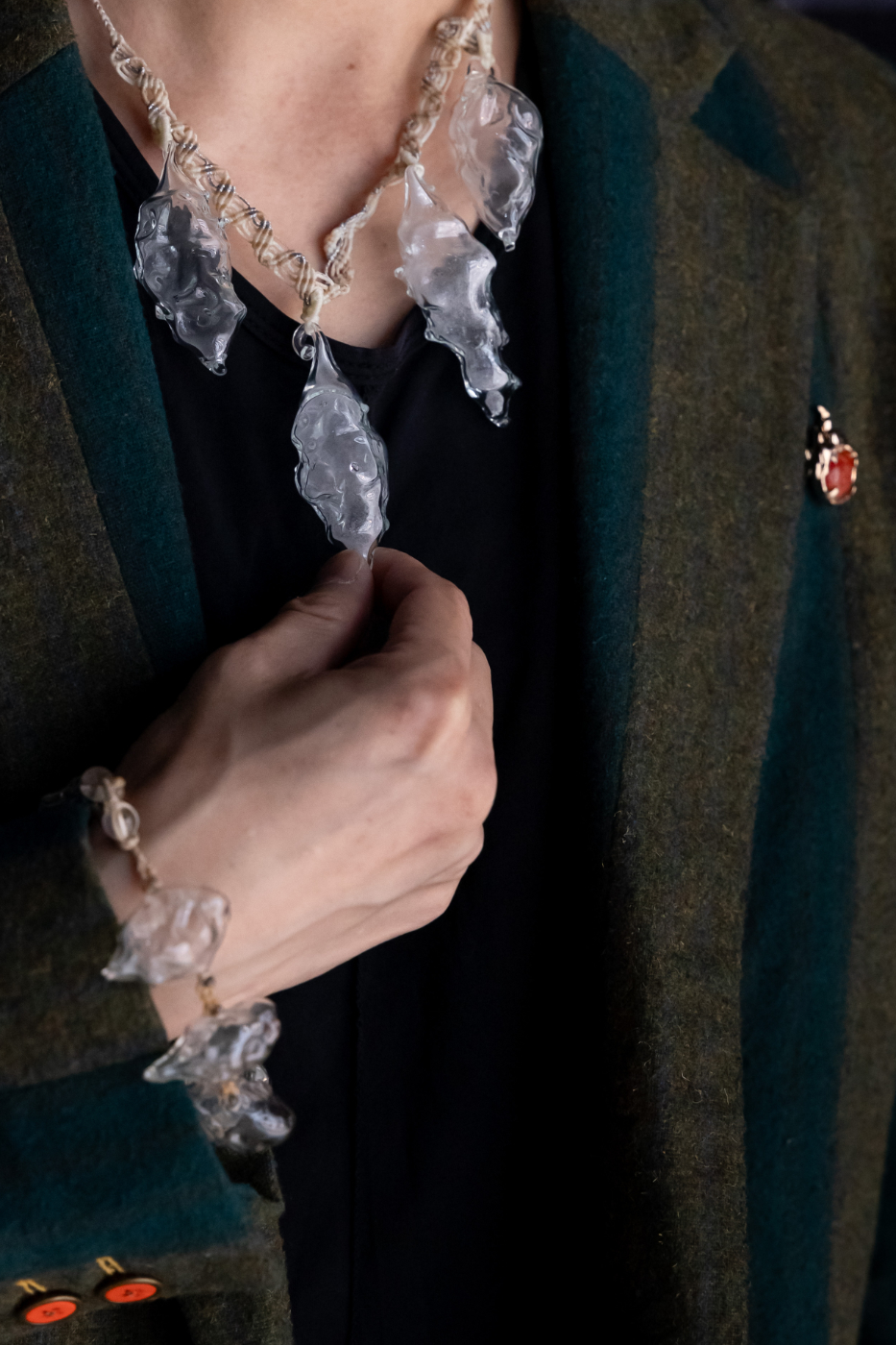
- “Plasma Organism” by Jive Lau @Kowloneon
-
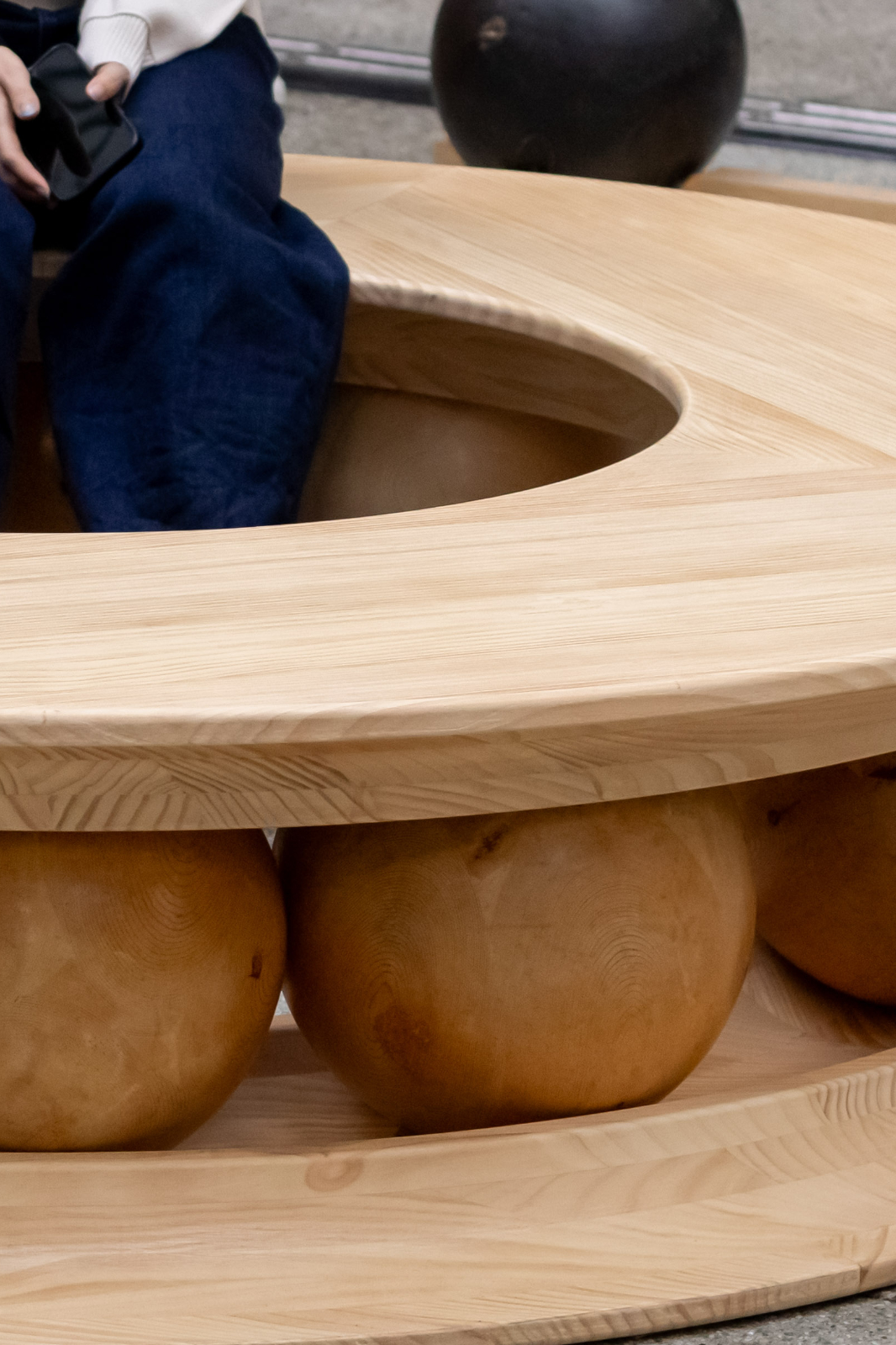
- The Ball Bearing Bench, part of “Language of Translation” by Canalside Studio
A holistic embrace
Naturally occurring moss and weeds are traditionally considered an eyesore in cities around the world, while manicured gardens are kept alive by intensive irrigation. Breaking down this unsustainable horticultural hierarchy is “Seed Terrain,” which imagines man-made surfaces as spaces for vegetation to thrive. Inspired by the living “scholar’s rocks” found in classical Suzhou gardens, co-creators ÉPHELIS (Kwan Wai Chan) and TAMCHIYAN (Carolyn Tam) experimented with hand-modelled clay and 3D-printed ceramics to find porous, water-retaining vessels that could serve as a base for life — outside rather than inside the surface.
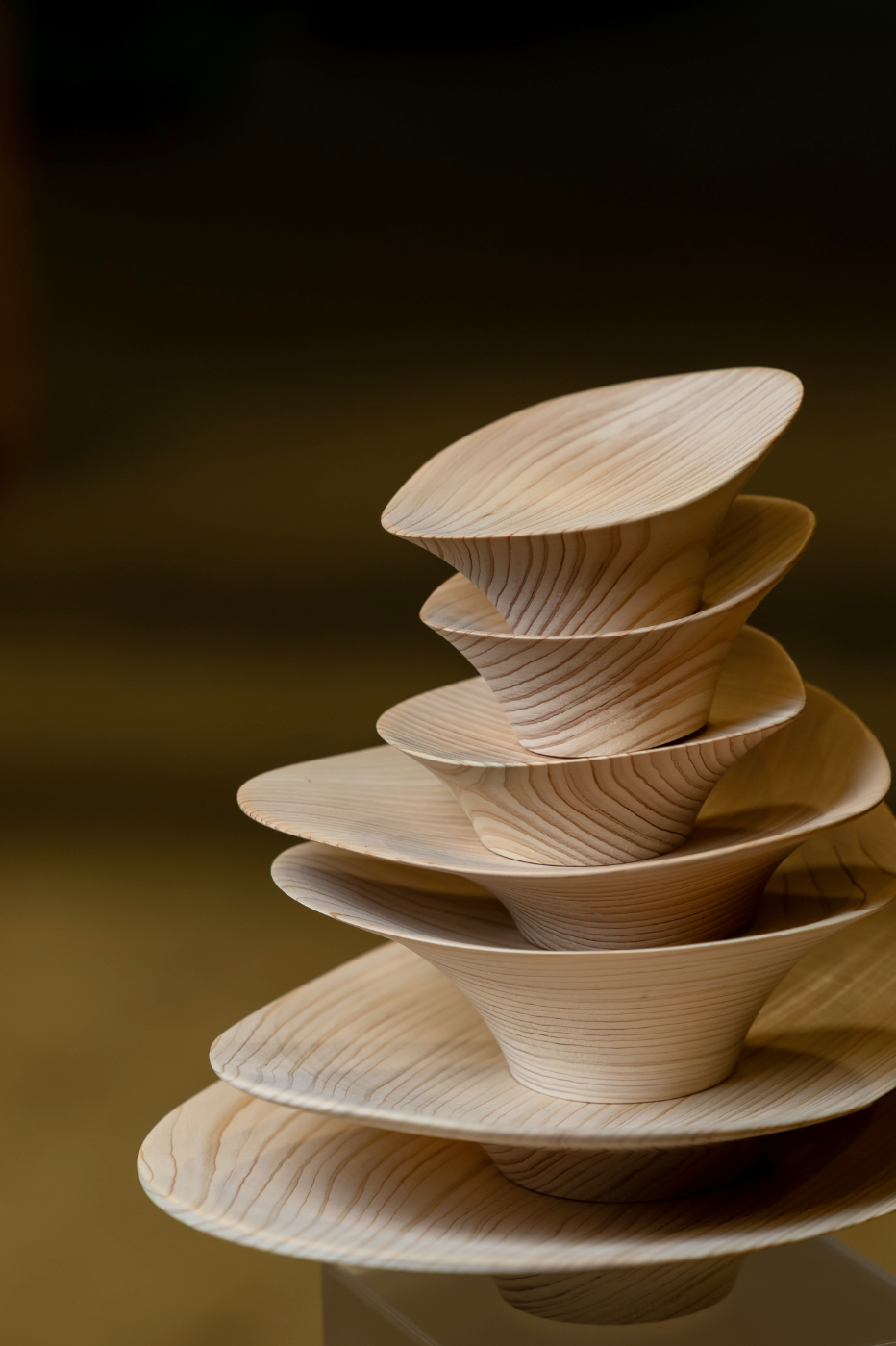
The imposition of mankind’s will on nature — its historical quest to stamp uniformity on the infinite multitudes of possibility — can be traced back for millennia. For at least 2,600 years, lathes have been used to craft round objects. In “Beyond the Circle,” design studio dou6 geoi6 so2 reworks the technique, breaking away from rotational symmetry to celebrate the irregularity of wood — allowing the material to shape the finished object. “The way we treat wood can offer more opportunities, different shapes, personalities and forms,” adds Cheung.
Integrating the natural world into our urban environment also drives Chi Tang and Leroy Yuan, a research duo whose Island Works project has collected data on wind, waves and topography across more than 200 of Hong Kong’s islands. “One of the unique characteristics of Hong Kong is that we live in a high density [environment] with these islands just next to us — but most Hong Kong people don’t go to the islands often at all,” says Tang. “We are in this hybrid condition: close, but contrary.”
That research fuels the group’s homeware, including lights that evoke the movement of tides and a pendulum-driven coffee table that bobs with the rhythm of a ferry ride. They evoke a moment “when inspiration strikes, you’re on the boat, it’s wavy, it’s shaky, but you want to write something down,” adds Yuan.
High-tech Hong Kong
A new patent-pending joint connector, used in construction, logistics or who knows what else, might not sound like the sexiest exhibit for a mainstream al fresco show — but deTour knows how to do things a little differently. In “Imagining Construction Otherwise,” a robot arm steadily builds and deconstructs a 3.5-metre-high scaffold structure in front of our eyes. Impressive, sure, but the best part? Visitors can navigate the evolving terrain via remote-controlled, camera-equipped robot carts. “It’s lucky here’s this opportunity where I can show it in a sort of more family friendly way,” says its inventor, City University of Hong Kong professor Victor Leung Pok-yin. In navigating around the terrain, “I hope that people can sort of imagine the future.”
An obsession with repurposing industrial production techniques led Hong Kong’s Canalside Studio to create the playful interactive exhibit “Language of Translation.” Its centrepiece is the Ball Bearing Bench, which enlarges the tiny metal spheres used in machinery beneath a circular spinning seat, a playful idea for public parks. “It’s like a merry-go-round people can use, a teacup in Disneyland,” says Francis Lam, co-founder of the PMQ-based studio.
Best known for his efforts to keep traditional neon light craft alive, Kowloneon founder Jive Lau used deTour as a platform to explore new tech, creating sculptural glass jewellery filled with noble gases. The bracelets in “Plasma Organism” light up not when worn but only when placed inside a magnetically charged storage compartment.
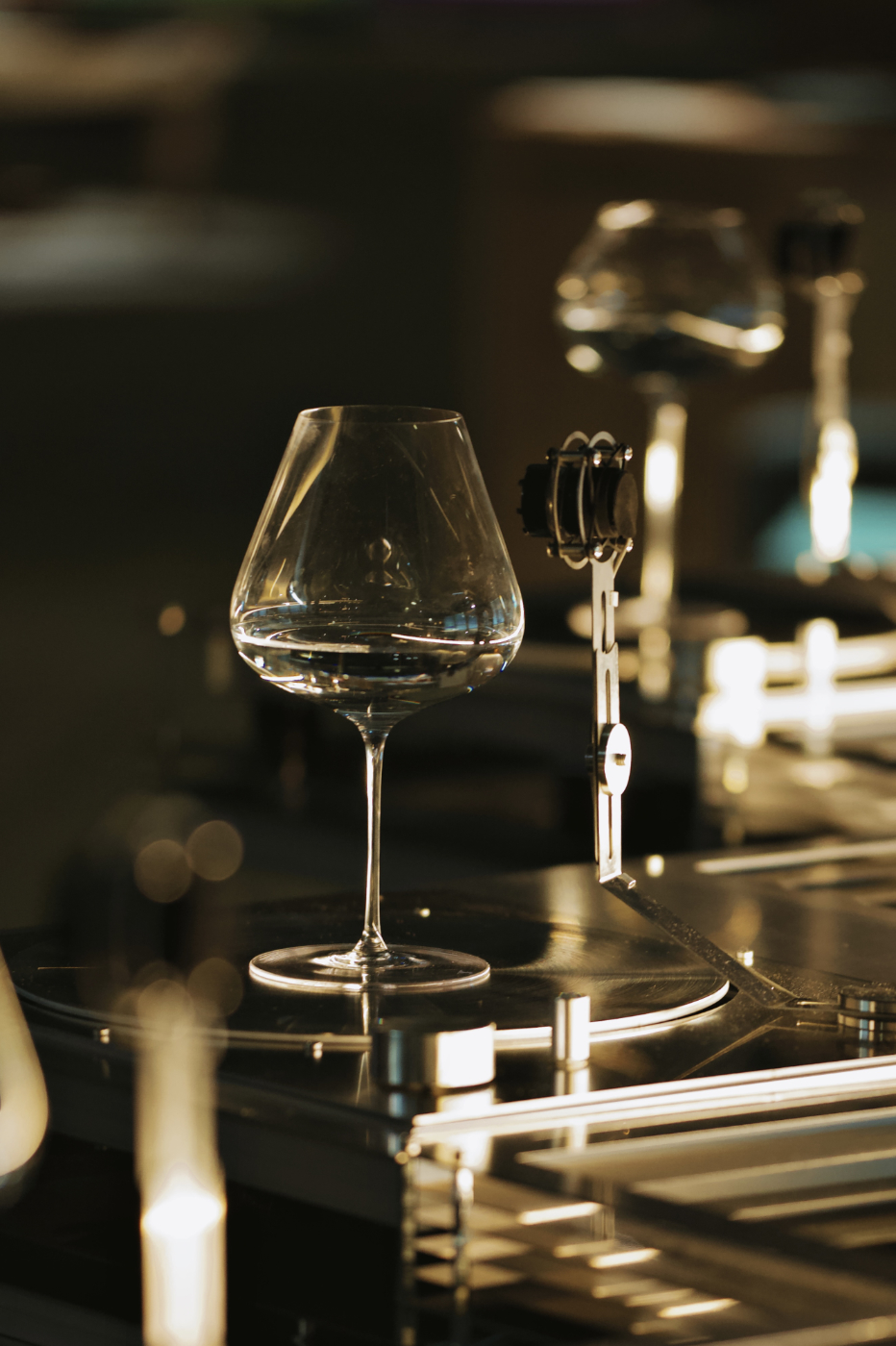
Chaklam Ng’s “Sip of Zen” finds an unlikely congruence between nightlife and spirituality, stirred with the crucial tonic of technology. Realising that a flicked wine glass resonates like a Buddhist singing bowl, Ng repurposed LP turntables, normally used for spinning vinyl, and fitted them with tiny microphones and speakers. Rub or tap a spinning glass and its sound feeds back, creating an amplified drone that Ng calls an “infinity loop.”
But this is no static, gimmicky installation — Ng imagines it being used in bars, and already has a live event booked. “So I’m thinking, when we are drinking, it’s actually more like a very noisy environment — why not turn it into a meditative experience?” says Ng, whose previous work included designing cutlery that made a pleasant noise when struck together. Every sip changes the tone that emerges and so, with six turntables in a row all chiming at once, clashing harmonies emerge. So, bottoms up: “We, the drinkers, actually want to find the harmony of each other,” adds Ng. “So, when we are drinking, we try to listen to the other guy’s tone and try to match the tone with this.”
-
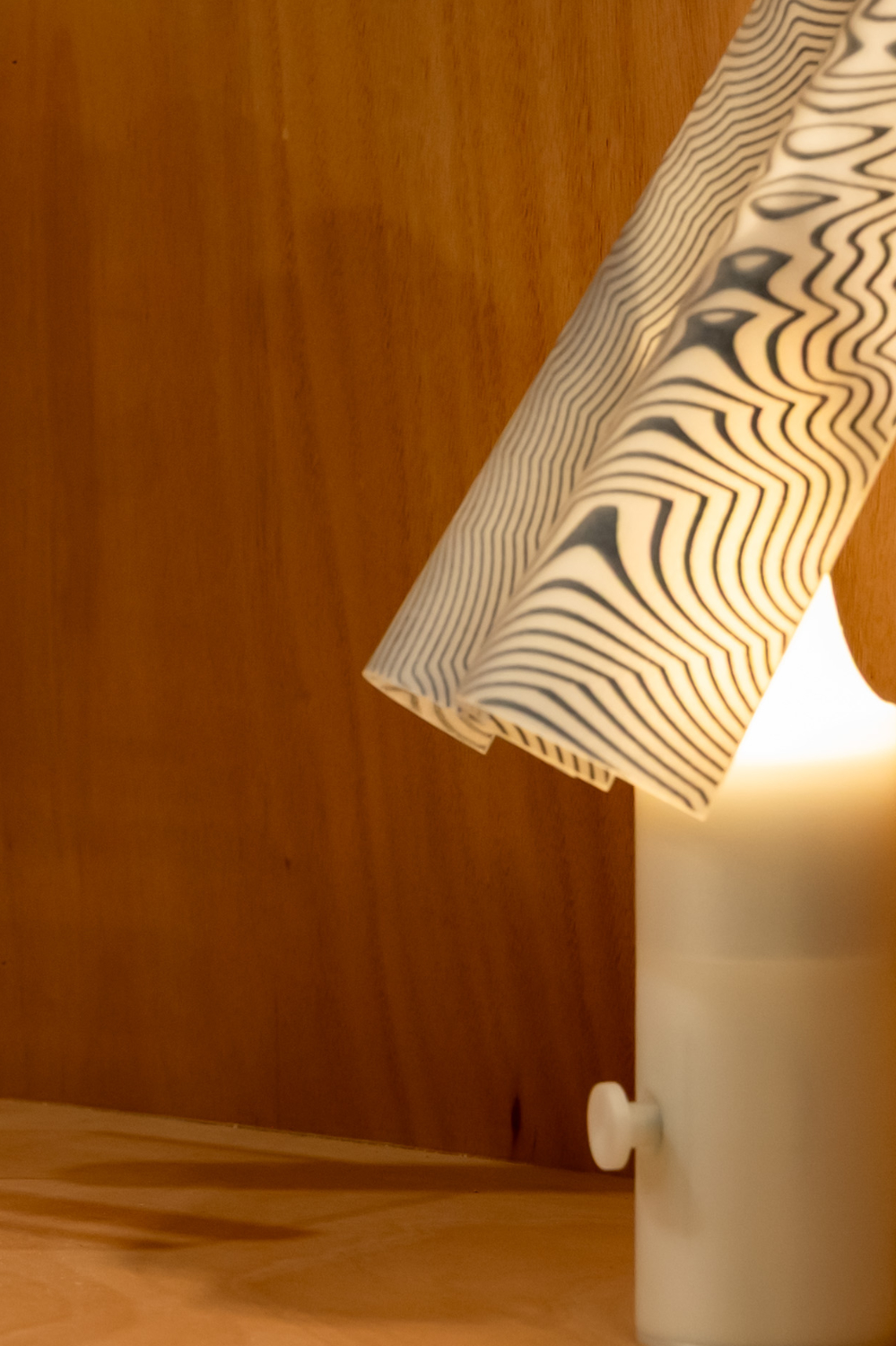
- “Rite of Passage”, Ultramar Studio by Ewan Lamm
-
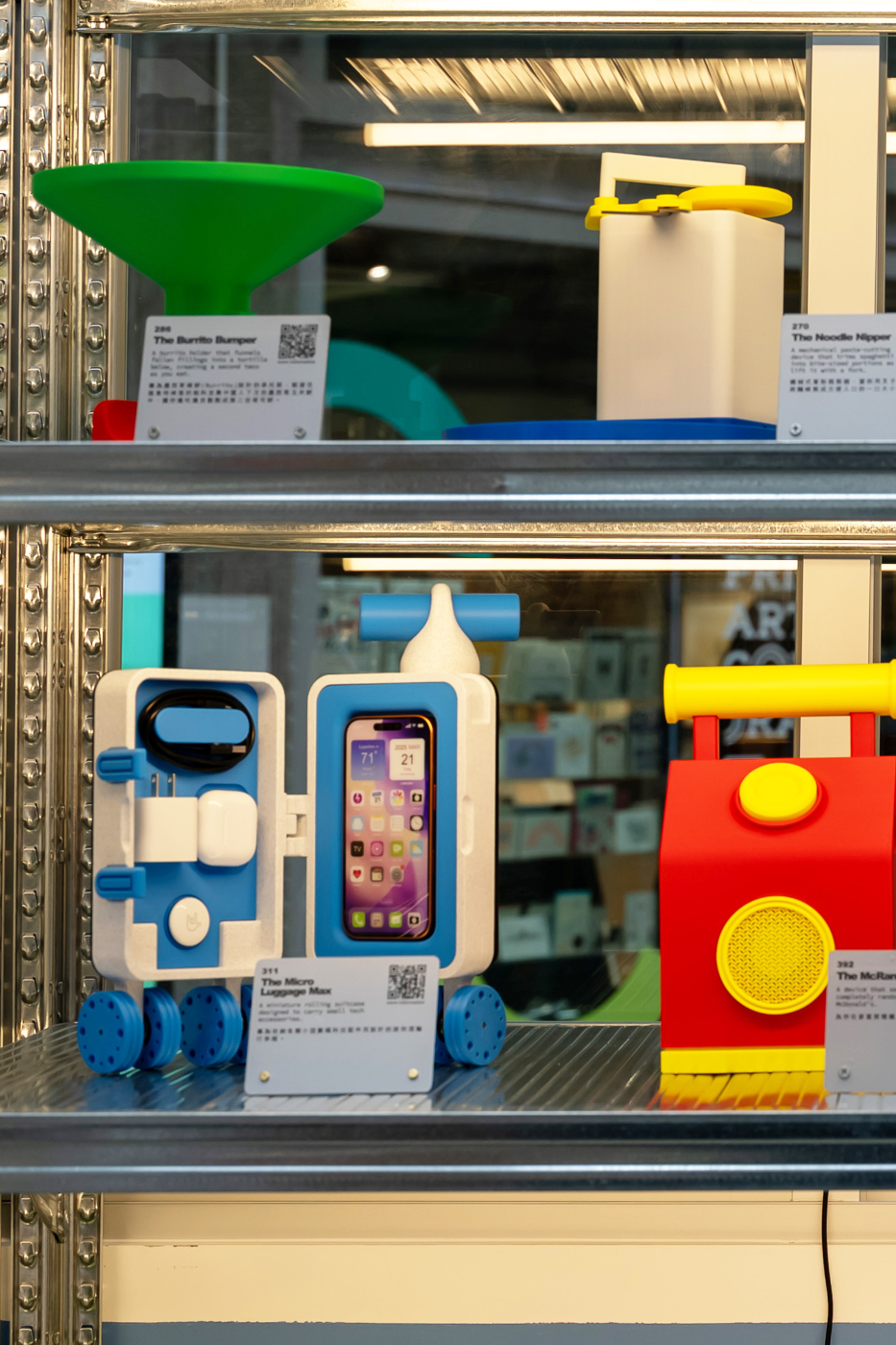
- “Department of Everyday Problems / Unnecessary Inventions” by Matty Benedetto
-
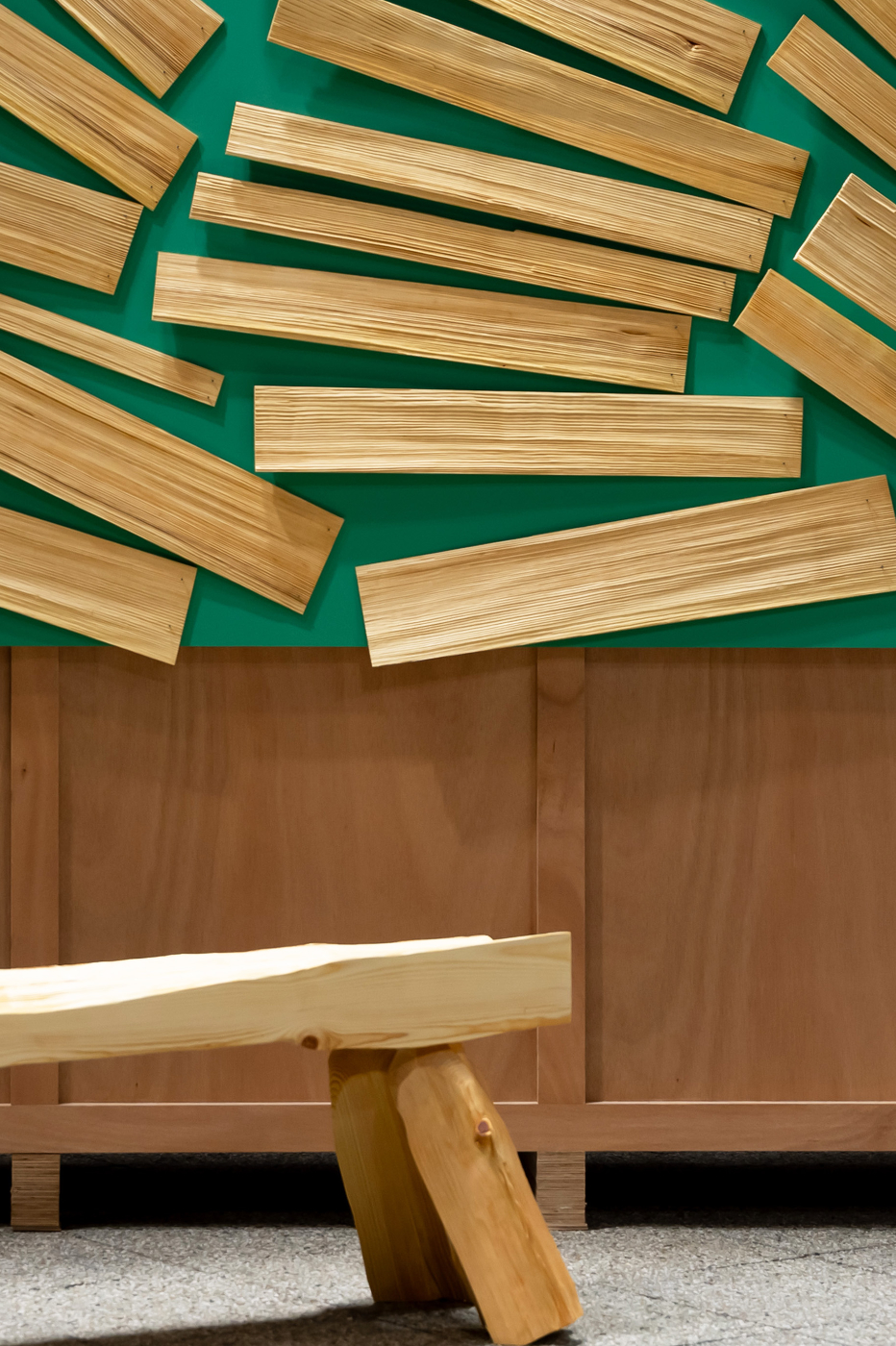
- “Wood As It Is” by Didi NG Wing Yin
-
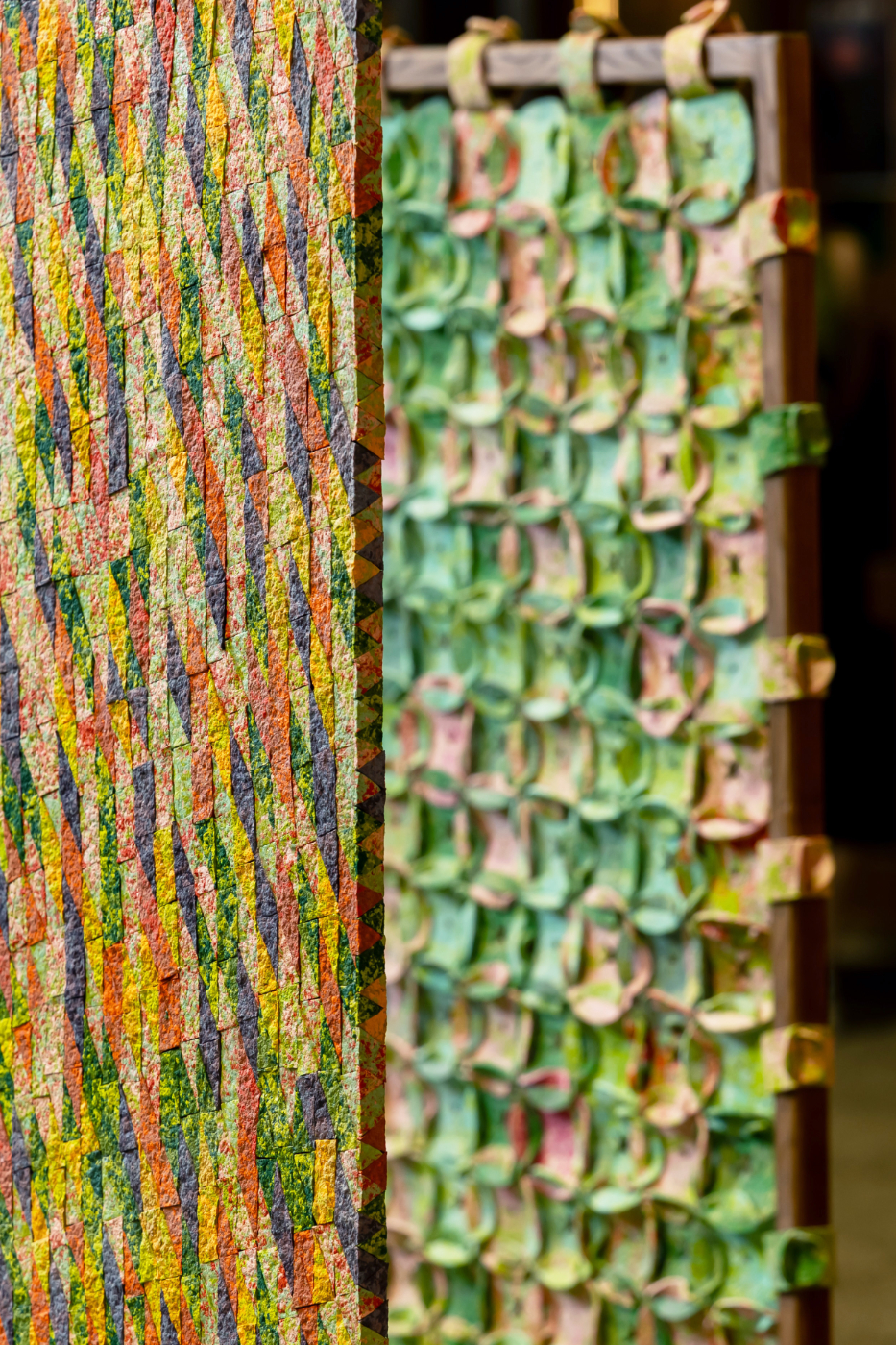
- “Reblooming” by Ripple Chen Studio
Inventions nobody needed?
A blow-up cushion to keep your controller safe from fits of gaming rage. An auto-locking “snack safe” that will only reveal its treat when you’ve got your steps in. A camera that won’t shoot without a furry friend in the frame. A conical catcher that funnels whatever falls out of your burrito straight into an empty, waiting taco shell. A credit card roulette machine to see who picks up the bill. A pair of chopsticks with earbuds at the ends?
These are just a few of the “unnecessary inventions” on display at deTour, created by Matty Benedetto, an American product designer and self-confessed influencer making his Hong Kong debut. With more than five million YouTube followers, Benedetto brings a little bit of star power to deTour’s otherwise regional perspective, and is sure to clock the most viral moments — whether that’s from visitors lodging new invention ideas at his spoof booth, the Department of Everyday Problems, or purchasing the ones he’s already put into production as merchandise. “I felt like the theme of ‘Better, Not Perfect’ definitely fits in with what I do,” says Benedetto, who enjoys “dangling” unrealised prototypes in front of a real audience. “I love being like: I know you want it, but you can’t have it.”
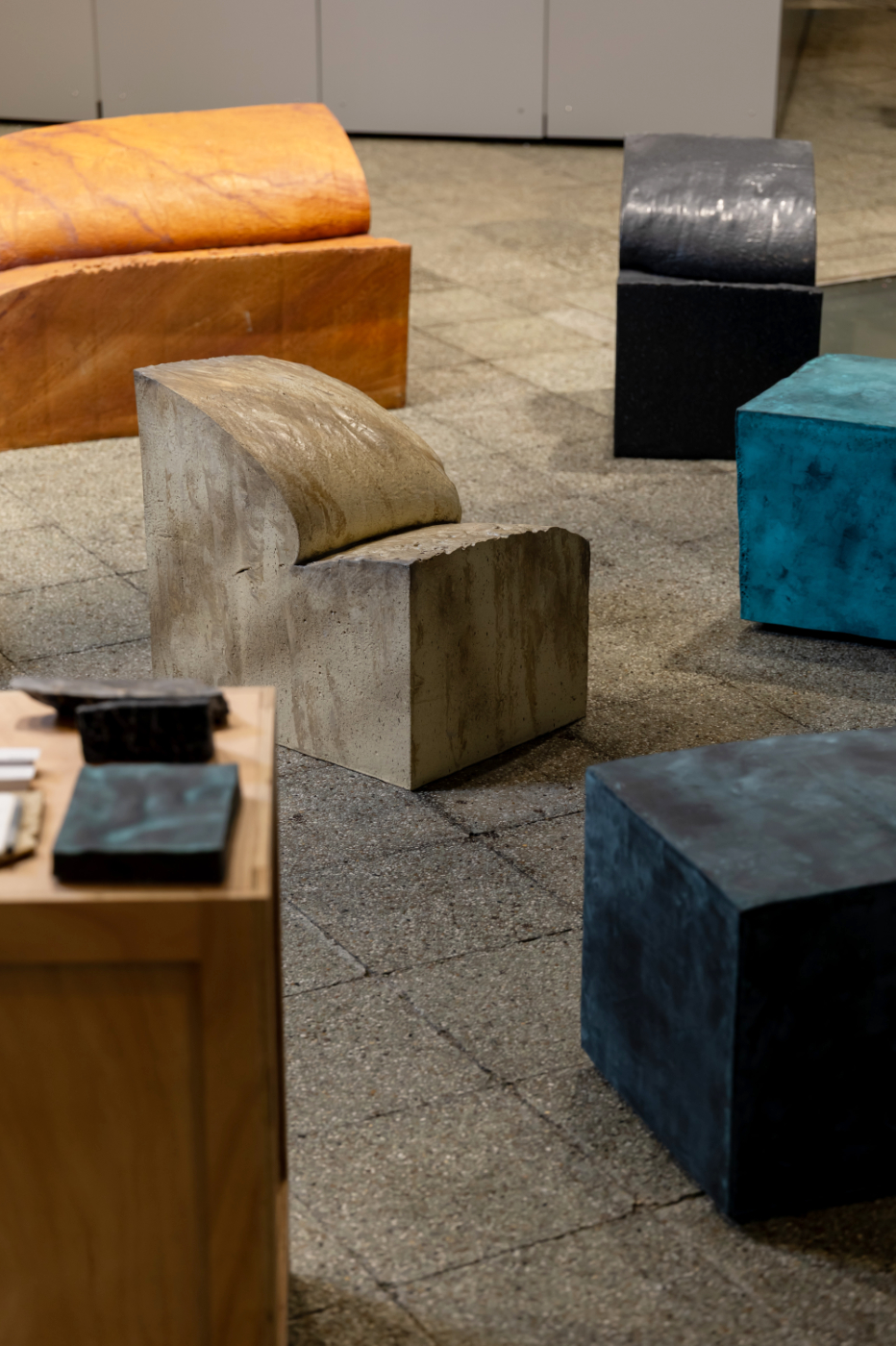
Also visiting from overseas is Italy’s IAMMI, whose “Tofu” installation showcases irregular and imperfectly shaped furniture blocks — chairs? tables? you decide — made from rejected polyurethane foam blocks. Light, fun and hand-finished to resemble stone, the pieces would lighten up any interior communal space. “For me, it’s not imperfection — it’s a unique piece,” says co-founder Stephanie Blanchard, hoping foam manufacturers will take up the idea and “not waste too much material.” Equally concerned with sustainability is mainland China’s Ripple Chen Studio, whose “Reblooming” shows how discarded plastic balloons can be collected, sorted and reused as decorative interior partitions.
Home Kong
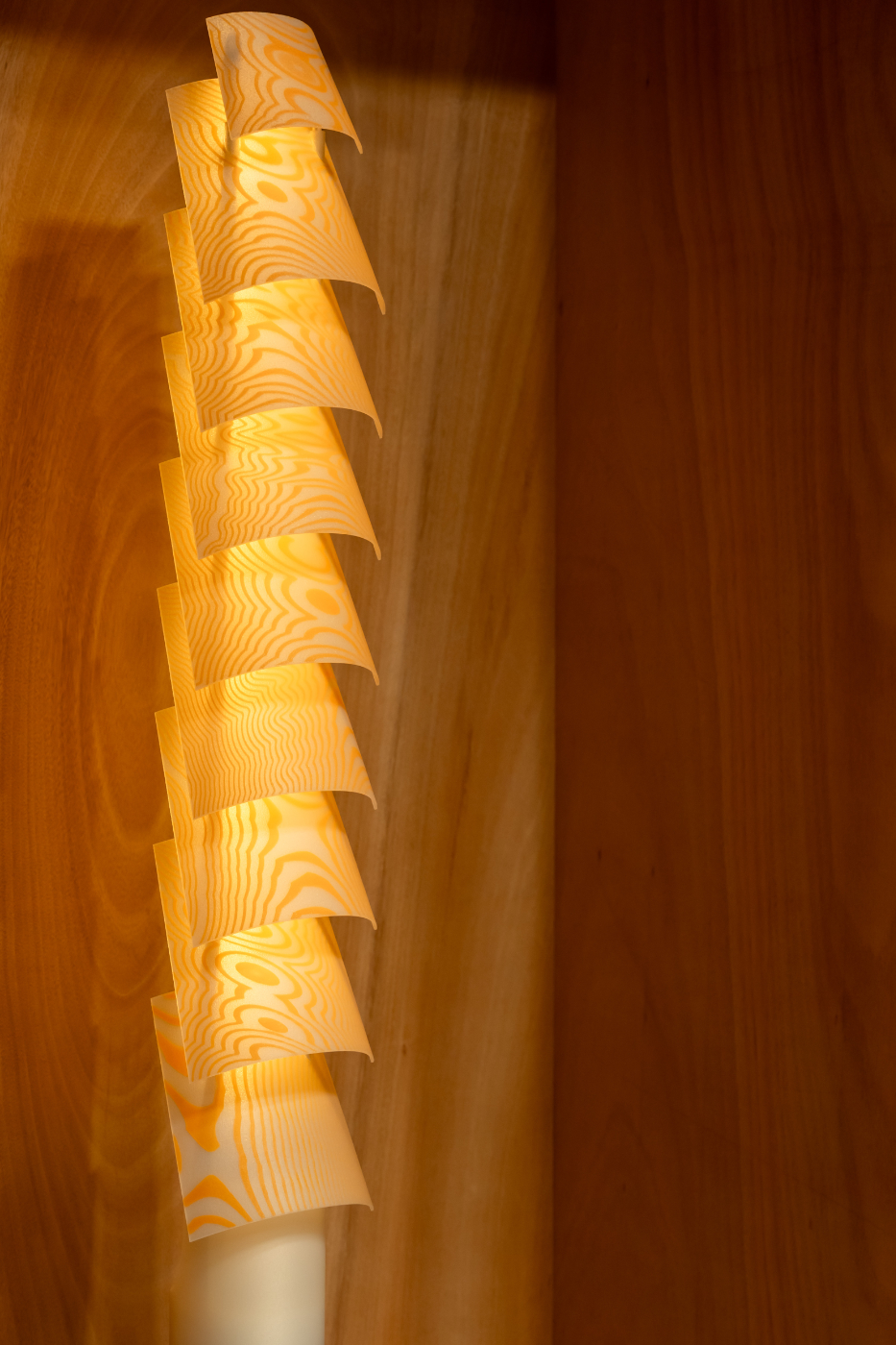
deTour also offers a platform to two notable émigré Hongkongers returning to share and showcase their work and methods. Ewan Lamm is presenting a new fused deposition modelling (FDM) 3D-printing technique developed by his Ultramar Studio, employed to create what he calls “synthetic wood.” The light fixtures displayed as his “Rite of Passage” draw inspiration from traditional sailing boats and Chinese architecture. “I wanted to capture that early landscape and reflect the origin of Hong Kong, as well as my own origins,” says Lamm, who was born in Hong Kong, raised in the UK and now based in Madrid.
Didi Ng Wing Yin moved to Finland eight years ago to pursue a master’s degree in interior architecture, but stayed on to “focus on wood,” inspired especially by the ritual of chopping timber for log-fired sauna sessions. He now has a studio in Helsinki; his “Wood As It Is” exhibit demonstrates how he painstakingly crafts bespoke furniture following a tree’s natural grain. “What I love to express in materiality — you don’t have to make it too complicated, but the texture itself is refilling itself to people,” says Ng. “When you look at it, you know, it’s wood, but also it doesn’t look usual. You want to touch it to see what happened there. This is what I love to do, to make.”
deTour runs at PMQ until 29 November 2026 — check our What’s On listing.