


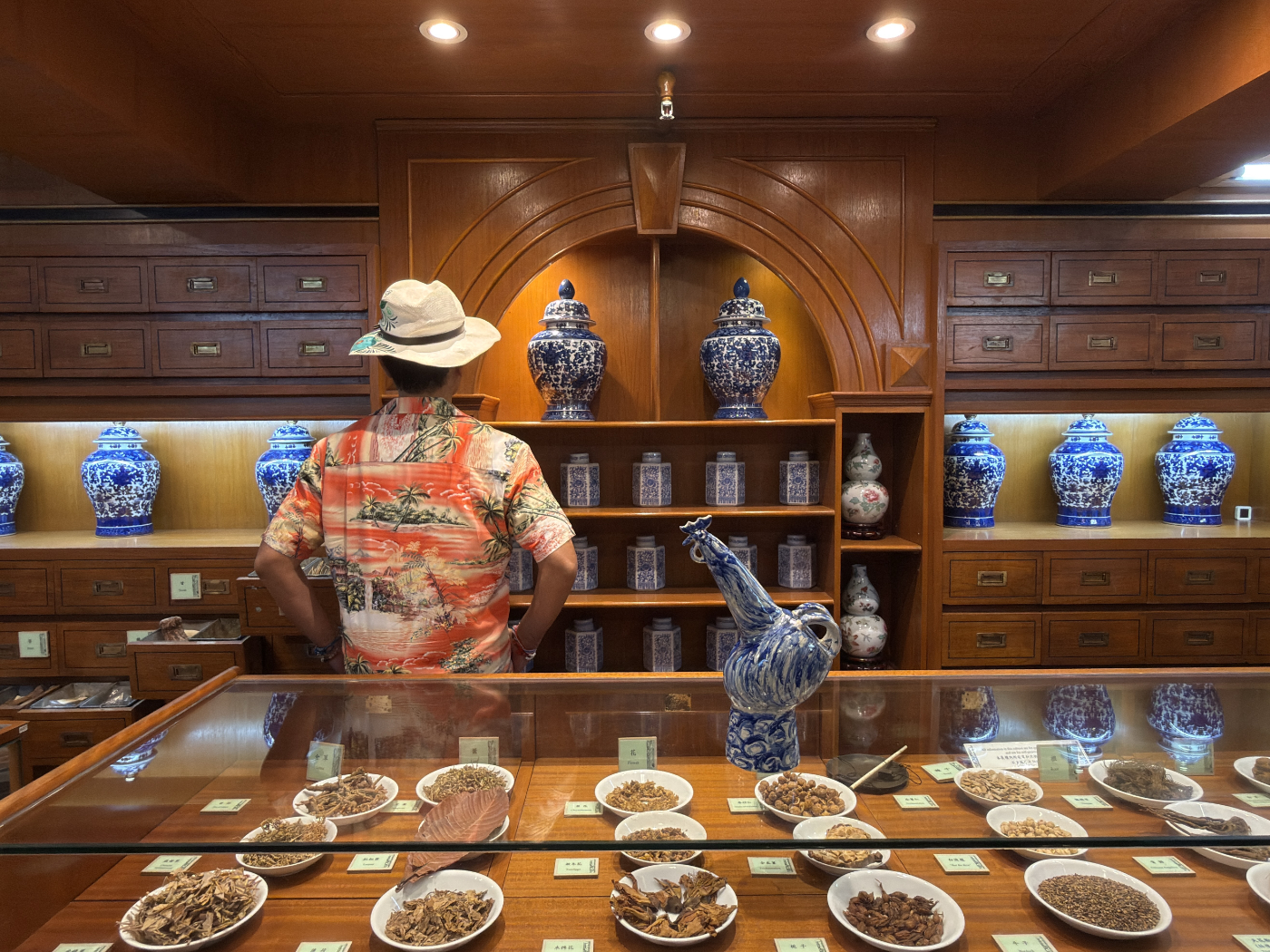
Hen_gai_gai is a photographic documentation project by photographer Lavina Lim and artist William Lim, centred on Gai Gai, a ceramic chicken they collected in Mexico in 2023. Since then, Gai Gai has travelled on over 50 trips across more than 35 countries, documenting global togetherness and solidarity despite geopolitical polarisation. We asked Gai Gai to share their adventures around Hong Kong in a new series of articles.
My excursions to different locations in Hong Kong is not only a pilgrimage to all of the animals represented by the Chinese Zodiac, but also a journey of self discovery that can hopefully shed light on existential issues about my life as a sentient porcelain chicken. There must be some reason I am physically built with the same materials as Chinese tableware, but spiritually complex enough that questions of mortality constantly bother me?
At times I feel trapped in my flightless, legless, and wingless body, when my mind yearns to run freely through the world and find answers to all of the questions plaguing my mind. But I know my unique condition will challenge me to experience the world in a way no other chicken could — and there must be a plus-side to having an immortal body.
One night, after agonizing over my inability to join the happy pigeons outside my window in their bird shenanigans, my ancestors came to me in my dreams again. Go to Tai Ping Shan and look at the museum, they said. Go and see how a body made of flesh and blood might limit you.
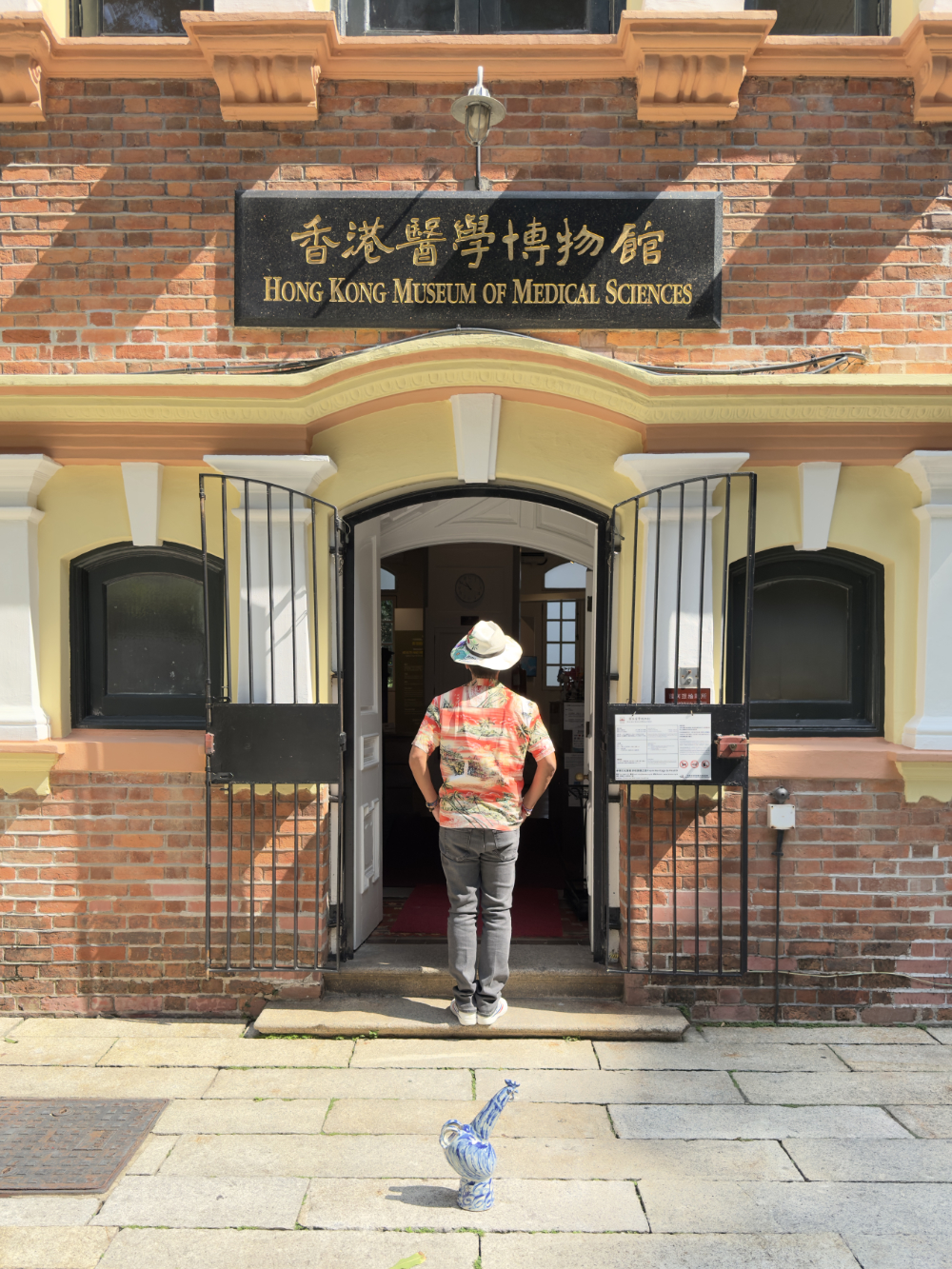
The museum they spoke of is the Hong Kong Museum of Medical Sciences, housed in a red brick building. It was originally home to the Bacteriological Institute, founded in 1906 in response to the 1894 plague outbreak in Hong Kong. Perched on a slope, it overlooks Blake Garden in Tai Ping Shan, where the plague hit the overcrowded Chinese quarter so hard that the colonial government had to tear down all buildings in the neighbourhood. The Museum of Medical Sciences was established in 1996 to revitalise the former plague lab into a site for educating the public about the medical sector’s history and development.
The museum is small and concise, focusing on the history of the plague and the development of vaccines, a nod to the building’s brief postwar role as the Pathological Institute, then a vaccine production centre until the 1970s. I was born way after the plague, thus I never had the chance to witness the havoc it wrecked on the city, but the many exhibits in the museum vividly demonstrated just how scary everything was.
During the 1880s, a plague epidemic in southern China moved towards Hong Kong, and by Spring 1894, up to 120,000 were reported from Guangdong. Hong Kong recorded its first case in May 1894, erupting with violent intensity in Tai Ping Shan, but continuing sporadically well into the 20th century. From 1894 to 1929, more than 20,000 cases were reported in Hong Kong, with a mortality rate of around 90 percent. The plague bacterium was identified in Hong Kong by Alexandre Yersin during the outbreak in 1894; four years later, scientist Paul-Louis Simond formally identified fleas carried by rats as the way the disease was transmitted to humans. Thus began man’s fight against rats as the main tactic to combat the plague.
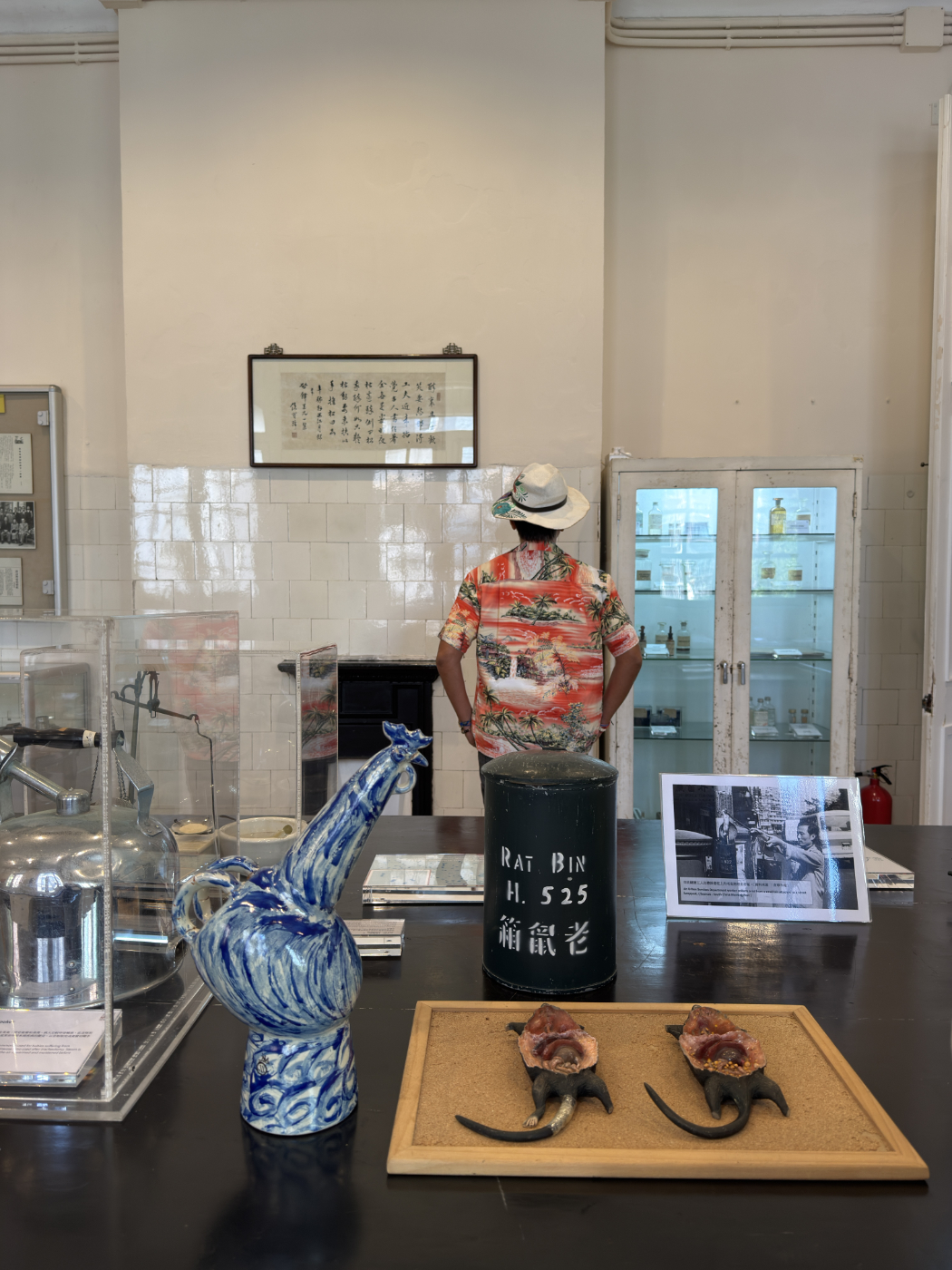
In the middle of the exhibition hall in the Museum of Medical Sciences, two model rats lie face up with their bellies sliced down the middle to expose their innards. Compared to a healthy rat, one infected by the plague has visibly grotesque growths mingled in its organs. The thought of such terrible lumps growing inside any body, be it rat, chicken or human, sent a chill down my non-existent spine. What if my human guardians were alive during that terrible outbreak? Would their bodies fall to the same disease and suffer the same condition as these rats? I couldn’t help but shudder at such terrible thoughts, and had to take a minute to remember that I was in a museum in today’s Tai Ping Shan, not the Tai Ping Shan during the terrifying era of rat infestation and deadly pandemic. My human guardian and I are safe. There are no rats out to get us.
Next to the model rats are two exhibits showing Hong Kong’s way of eradicating rats during the plague era. A lidded black bucket with the words “Rat Bin” written in Chinese and English stood next to a historic photo of it being hung on a lamp post. Citizens were encouraged to pick up dead rats and drop them into these government-installed rat bins filled with disinfectant, so that the rat corpses could be safely collected for disposal instead of remaining in the city, spreading the disease.
The bin reminds me simultaneously of garbage cans and coffins, fitting imagery associated with rats that are not held in high regard in the Chinese zodiac line up, but hated and hunted as sewer inhabitants and carriers of pathogens. The sturdiness of the rat box and its tight lid looked oddly reassuring, as if it signified hope and progress in the great fight against one of the deadliest diseases ever known to men: humans can put a lid on the plague, by way of putting a lid on the rat box.
I have no personal grudge against ratkind: they can be kind and intelligent, but unfortunately they can also spread disease when they live in the filthy parts of human habitats. The history of the plague, with its Chinese name 鼠疫 (syu2 jik6) defining it specifically as a pandemic caused by rats, makes it impossible for rats to shake off their bad name.
Today, rat boxes have long retired and other rat-control devices such as rat traps and rat poison discretely sit in corners all around town to protect all living beings against the rodents. Standing among the relics that bears witness to the history of man’s fight against the plague in Hong Kong, I find myself surprisingly grateful that my body is made of porcelain, a material that is immune to the plague or any other mortal disease.
There have been no more plague cases reported in Hong Kong since the last two in 1929, although cases are still occurring worldwide as cast natural plague foci persists where wild rodents carry the infection. I understand now, dear ancestors. And I am grateful.