


Despite making his feature debut with a film set in the world of the stage, Keane Wong Tak-kin admits he’s not really a theatre kid. “I do go to the theatre. I like it, but I wouldn’t say I’m a theatre bug,” he says. “I still stick with cinema most of the time.”
Even so, Afterpiece (第四幕) channels the spirit of Joseph Mankiewicz’s All About Eve as much as Derek Yee Tung-sing and Lo Chi-leung’s Viva Erotica in its almost farcical backstage antics.
Wong has been obsessed with cinema since growing up in Malaysia. His Malaysian father and Hong Kong mother met “somewhere in Europe” and ran a restaurant in Germany, where Wong says he was born. For him, cinema was a way of accessing memories and emotions he was not always comfortable confronting as a teenager. He had an inkling he wanted to direct films, but “I didn’t have a clear picture of what a director was, and I didn’t have the quantity of films watched to be a movie nerd. The first film I recall seeing where I realised what a director was was Johnnie To’s PTU,” he says, referring to To’s brooding 2003 crime thriller. At 16, Wong moved to Hong Kong, his mother’s hometown, and eventually enrolled in Hong Kong Baptist University’s film programme.
“You know, back in the day — can I say this? — in Malaysia we had a lot of pirated movies,” he says with a delicate Malaysian lilt. “But the first DVD, the first copyrighted one, I ever bought was Protégé.” In a twist of fate, that thriller was also directed by Yee, whom Wong met when he was 19. “I would say almost everything I learnt about filmmaking, even until now, is because of him. Having him as my mentor was one of the luckiest things ever to happen in my life, especially in my film career.” That’s no exaggeration: Yee produced Afterpiece.
Though Wong had some luck along the way, he also worked hard to learn the trade. After graduating, he tried nearly every branch of film production, from assistant directing and continuity to post-production editing, sound mixing and colour grading. He worked in equipment rental and even took extra roles to see how a set functioned. His interest in the stage began while working on a film whose director wanted his inexperienced actors to undergo theatre training.
“So we had a theatrical acting coach who was very demanding about expressing true feelings. That stuck in my mind.” Wong realised that the experience could help him explore the line between truth and falsehood on screen. He originally imagined his central character as a filmmaker but hesitated at the prospect of another film about filmmaking. “Then I got caught up on the idea that ‘The show must go on.’ Which has the power to push all the characters and the story in different directions.”
-
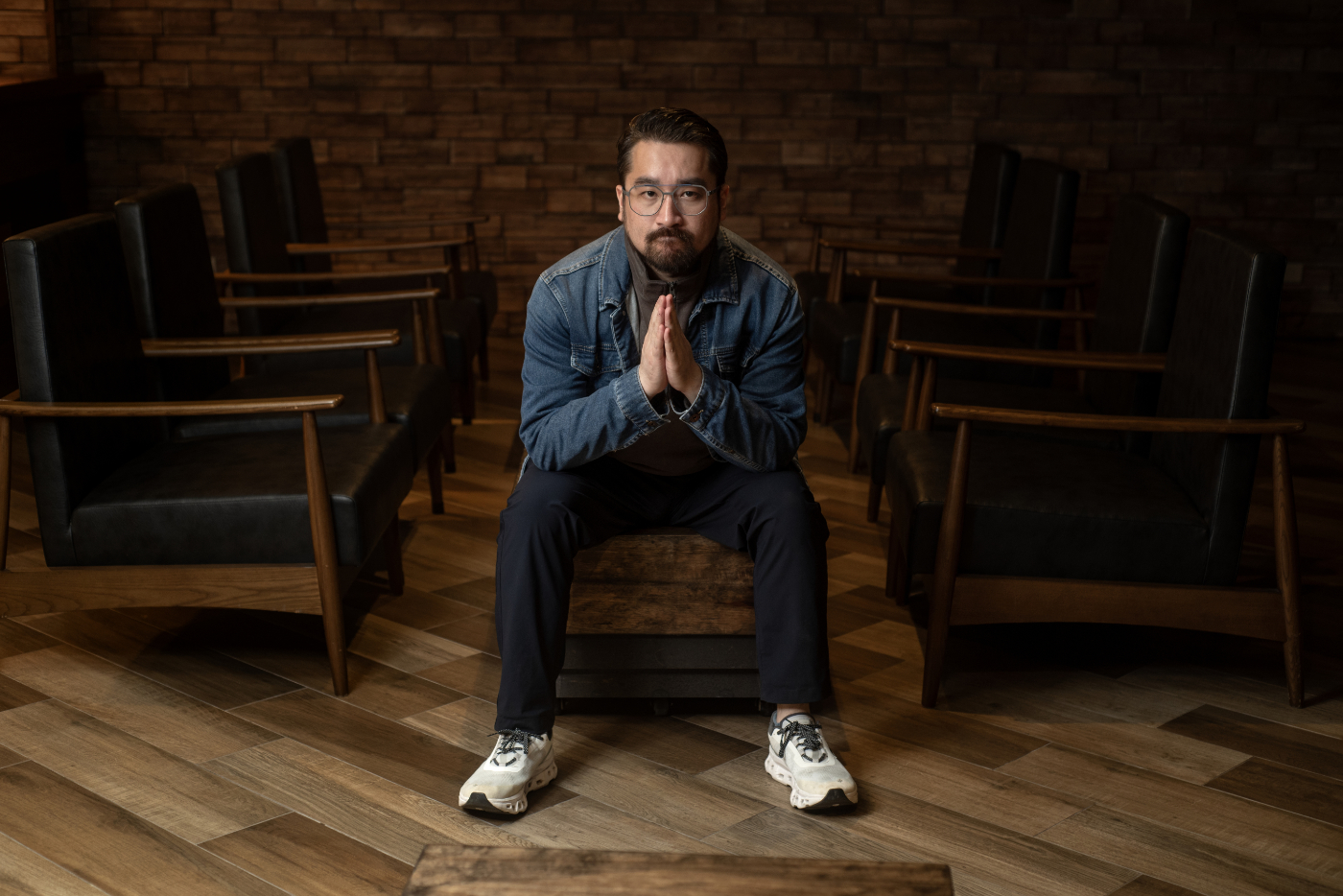
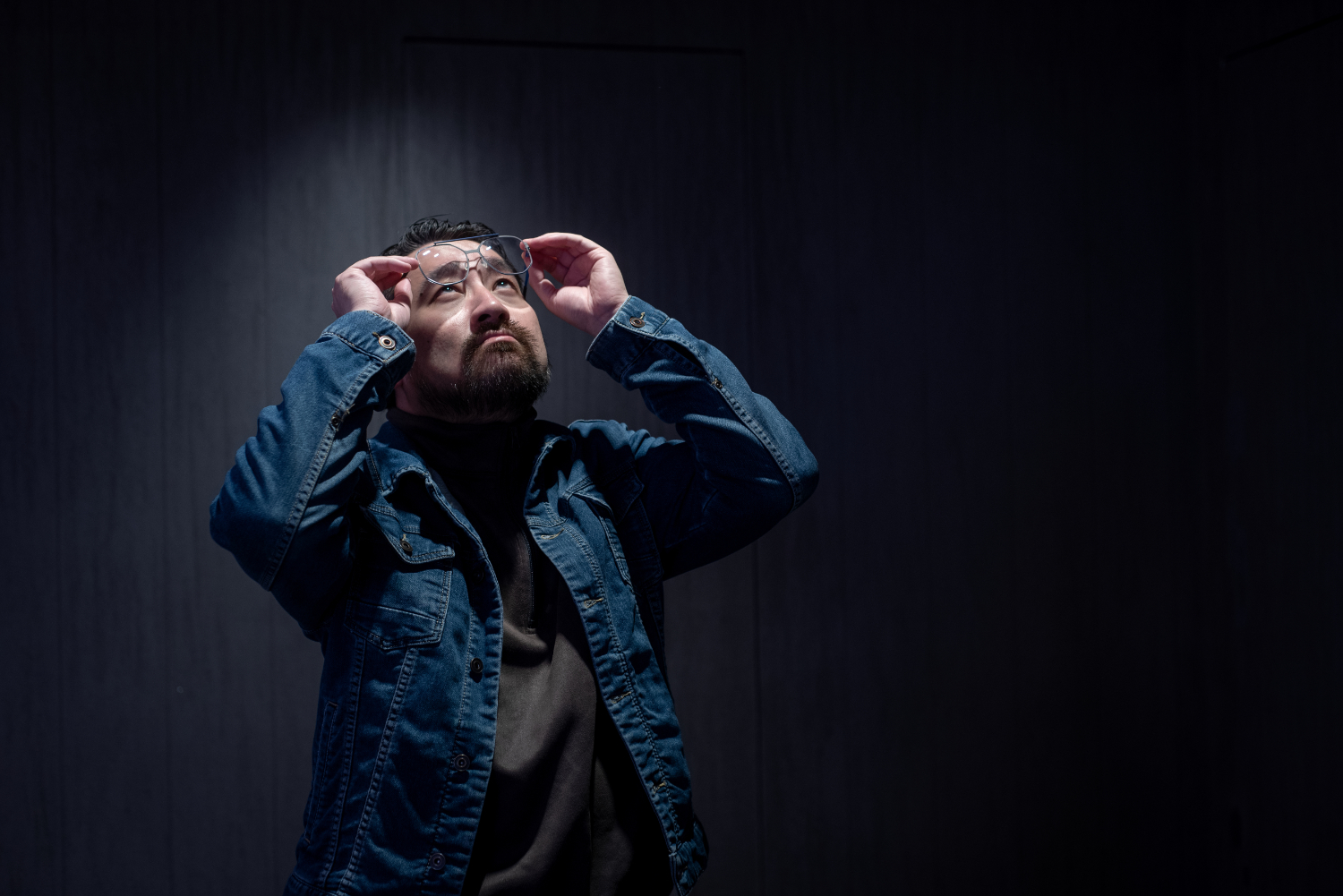
- Film director Keane Wong Tak-kin – Photo by Xiaomei Chen for Zolima CityMag
-
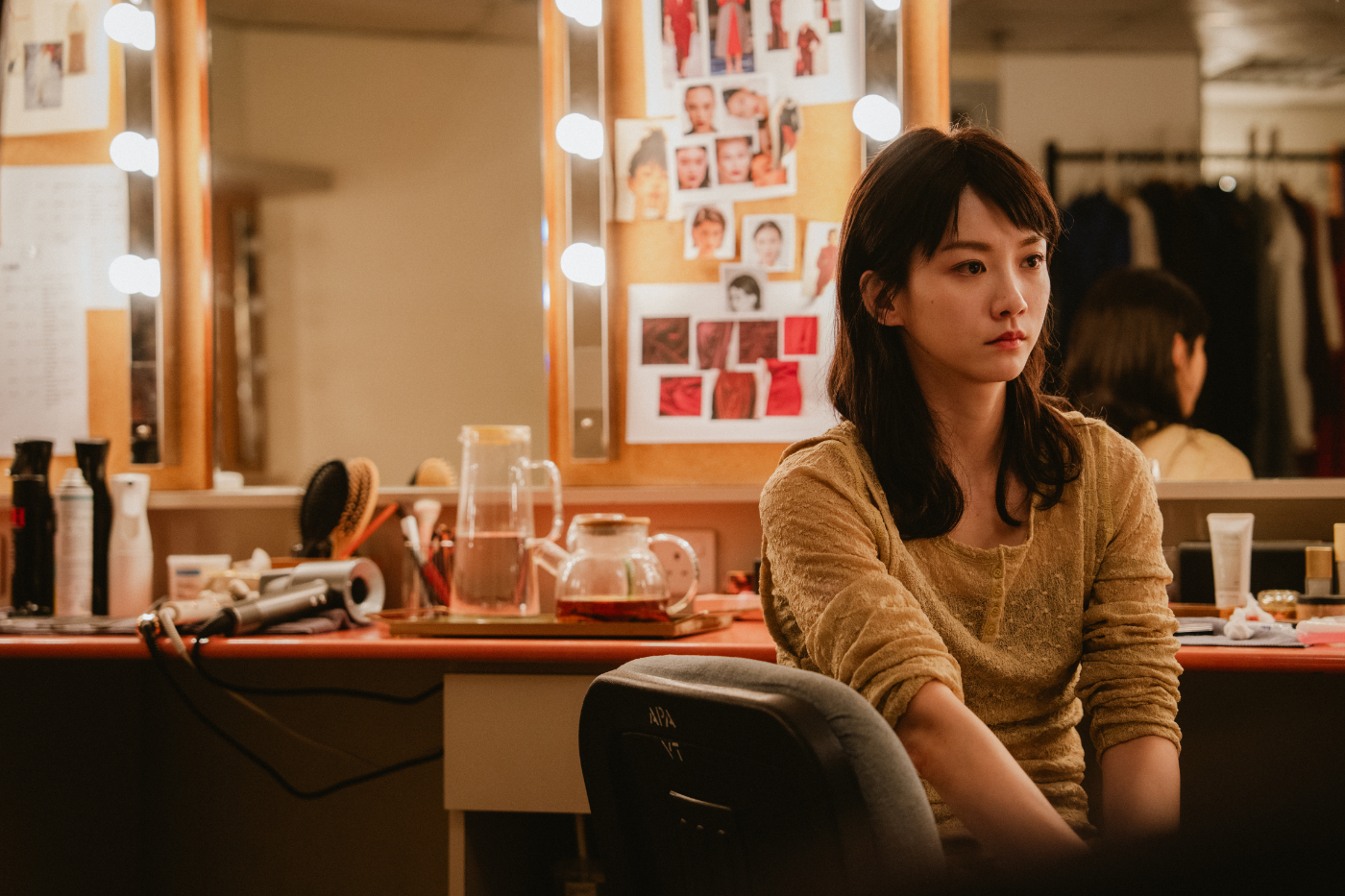
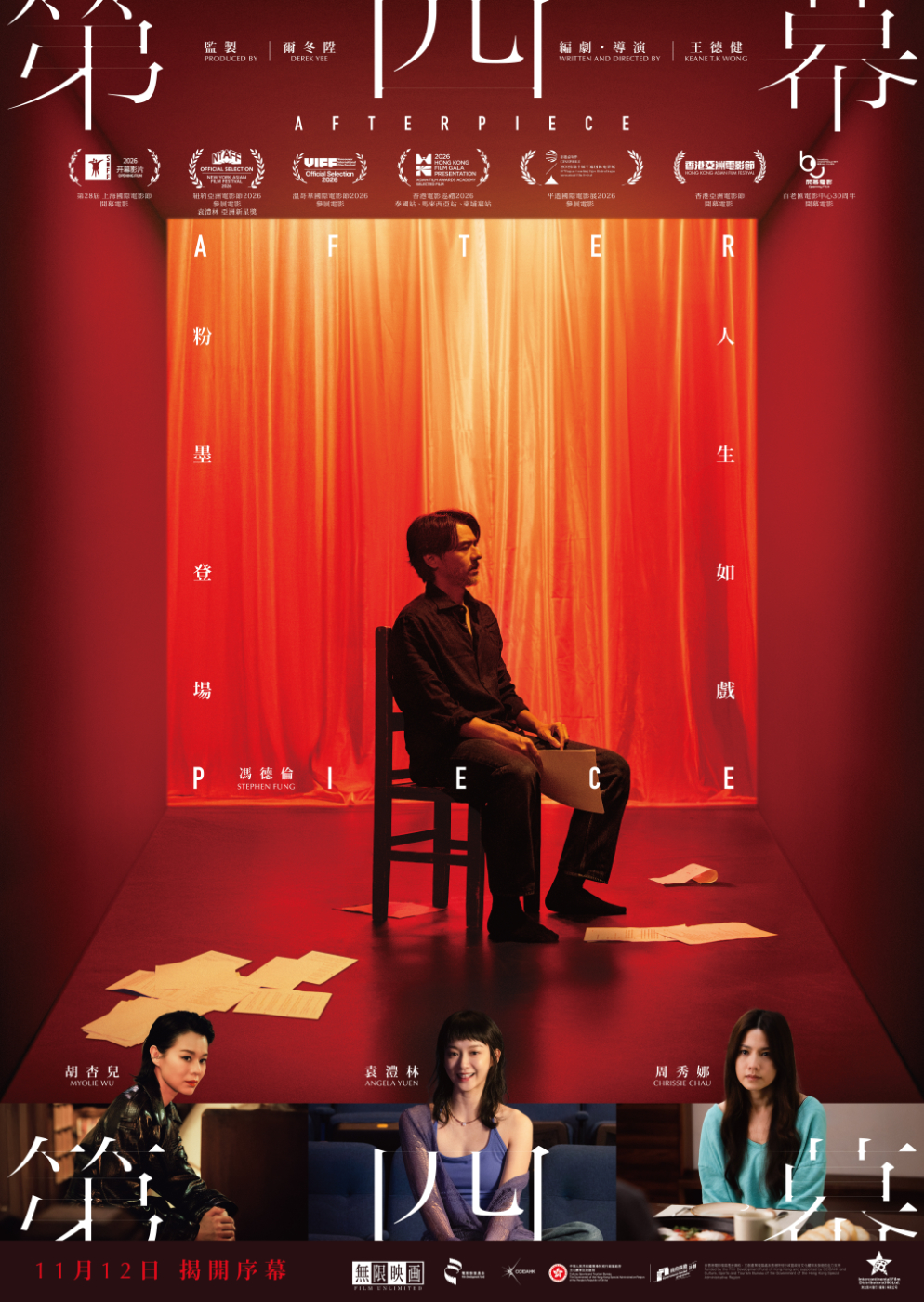
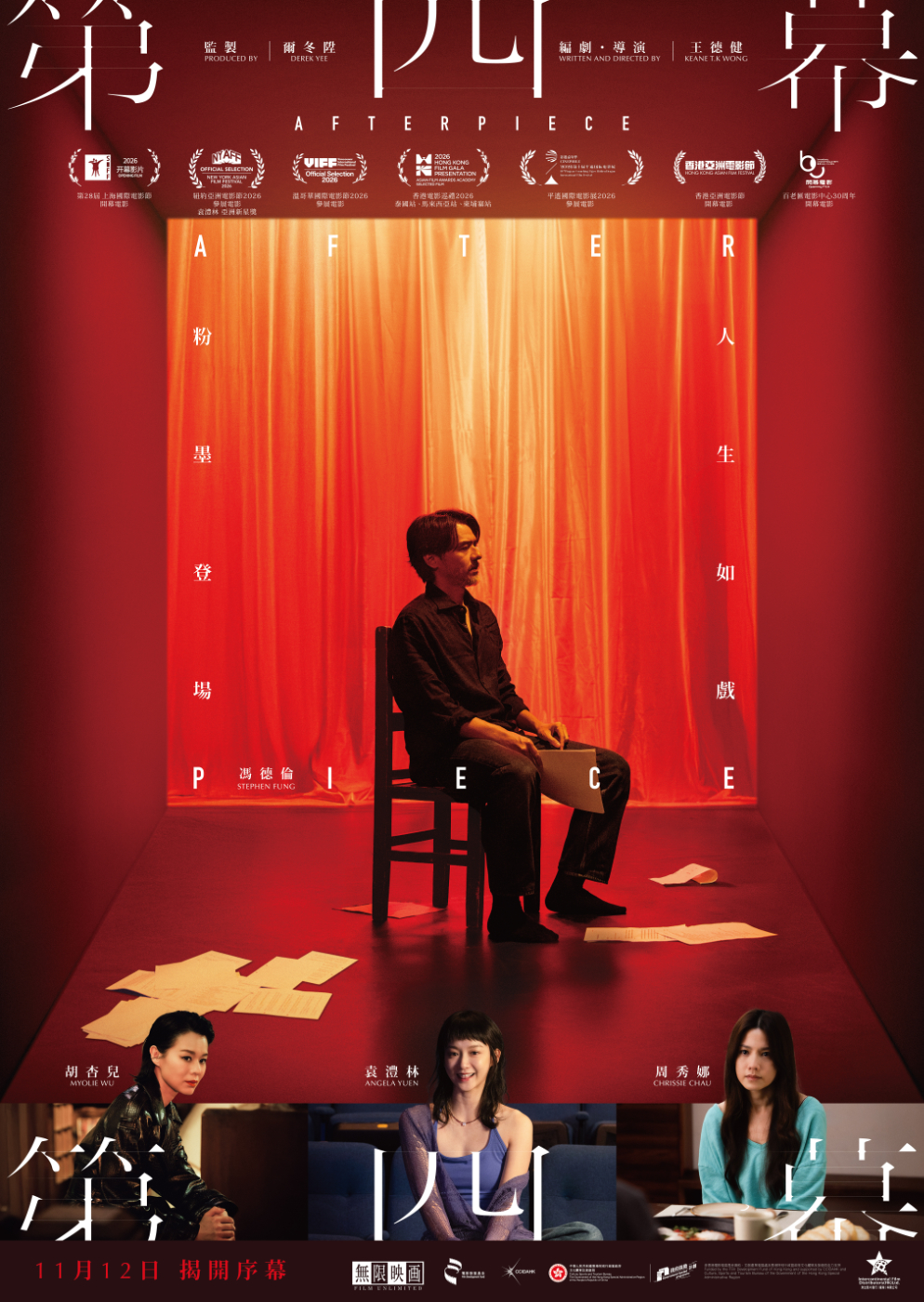
- Angela Yuen plays aggrieved actor Hannah in Afterpiece – Photo courtesy Intercontinental Film
Life and theatre
The story Wong eventually devised is ambitious, though not in a spectacular, visual effects-heavy way. Afterpiece — a term for a short dramatic work performed after the main play — explores the blurred boundary between life and theatre, the tension between art and commerce, and the cost of success. Dark comedy and farce give way to a dash of thriller. Following its world premiere as the opening film of the Shanghai International Film Festival in June 2026, it screened in Vancouver and New York and was selected for the Golden Horse Film Festival. More recently, it featured in Broadway Cinematheque’s bc30 programme.
Afterpiece follows once-acclaimed theatre actor and director Owen (Stephen Fung Tak-lun), whose writer’s block has lasted a decade. He finally has a breakthrough and sets out to write, direct and star in a comeback play, Looking Back. Wong built the script around its ending: “I had the ending first. I knew what it would be and I had a very strong image of it, so then I went back to see all the other characters and what his backstory was?” In many ways, Afterpiece is an old-fashioned character-driven drama, with no overt metaphors for Hong Kong’s social ills or millennial angst.
In the decade since his last production, Owen has allowed his marriage to financial analyst Tracy (Chrissie Chau Sau-na, Behind the Shadows, Spare Queens) to crumble. Toto (Alan Yeung Wai-lun, We Are Born Good), the son of Owen’s late producing partner, threatens to sue over an old contract. Owen finds himself in a professional and personal quagmire when movie star Melinda (Myolie Wu Hang-yee), his former lover, takes the leading role he had intended for Hannah (Angela Yuen Lai-lam, The Narrow Road, Gamer Girls), an inexperienced newcomer. As his connections to the three women and theirs to one another bleed into his work, the line between his public and private lives begins to blur — a tension elegantly visualised by cinematographer Derek Siu Hing-wa, who uses the spaces and language of the stage to cinematic effect.
Afterpiece boasts one of the most recognisable casts in recent Hong Kong cinema. Chau, Wu and Yuen have established careers on screen — Wu in particular is a television veteran — while Fung belongs to a generation of actors who emerged in the 1990s alongside Nicholas Tse Ting-fung, Daniel Wu Yin-cho and Terrence Yin Chi-wai. Fung has appeared less frequently in Hong Kong films in recent years, making his return to a leading role notable. Wong didn’t write Owen with Fung in mind, but a chance encounter at the Hong Kong Film Awards changed that.
“He was there, and he had this white beard, and then I thought, ‘Oh, I’ve never seen him like that.’ He just looked mature, and I had a really strong feeling that this was worth exploring; to see what he’s like on the big screen now,” says Wong. “He really should be on big screens.”
That instinct pays off in Fung’s balance of charm, ego and hard-won wisdom. Owen has relied on his perceived genius for so long that he fails to recognise the damage he inflicts, particularly on the three women at the heart of the film. Wong cites Martin Scorsese’s Taxi Driver and John Ford’s The Searchers as less violent points of reference for Owen. “He’s in a classic middle age crisis. These men, somehow, have such egos they’re convinced they need to rescue a girl whether she needs rescuing or not. That’s what I observe around me, so I put it in this character — plus a little bit of imagination.”
-
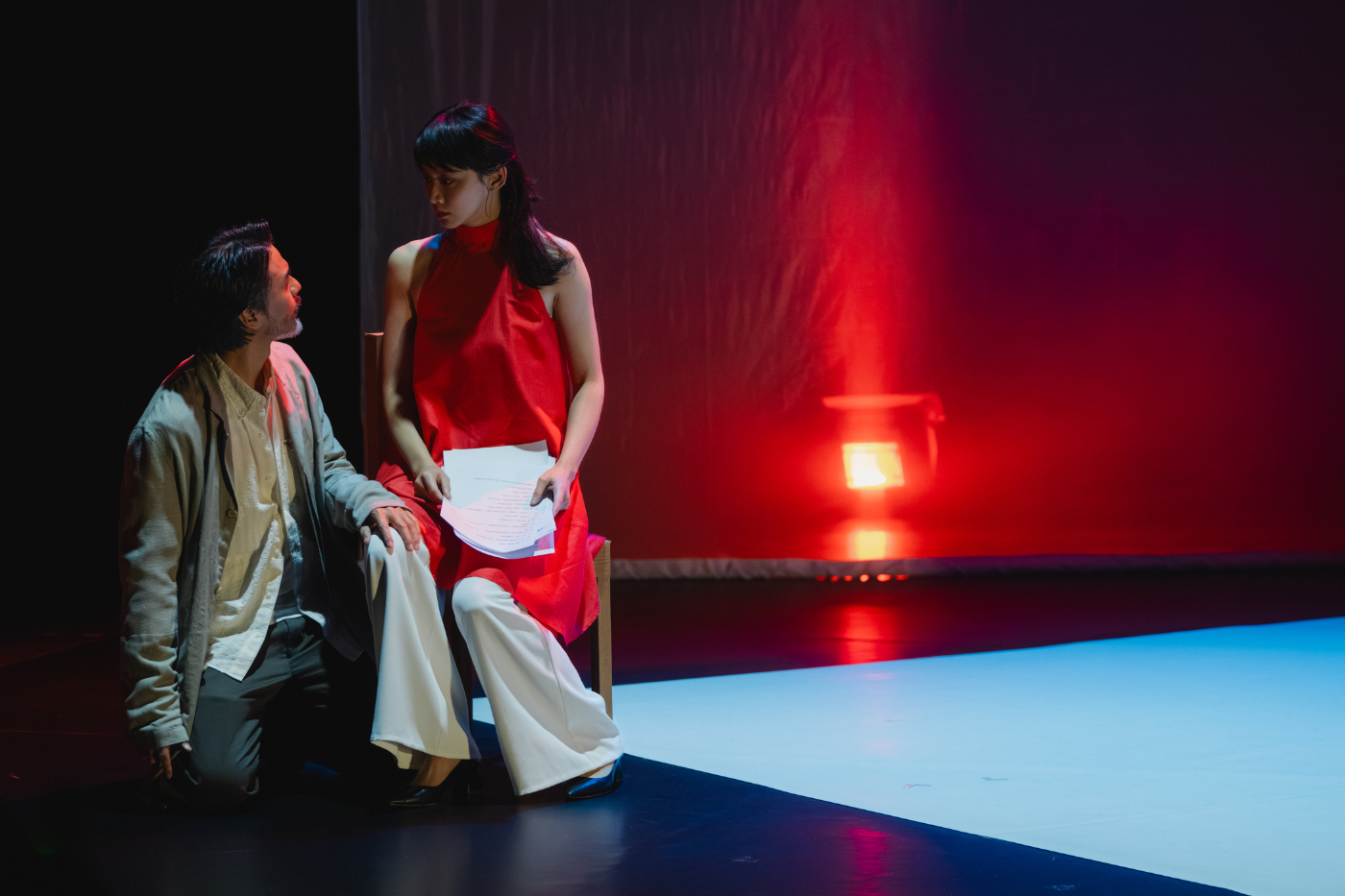
- Owen and Hannah on opening night – Photo courtesy Intercontinental Film
-
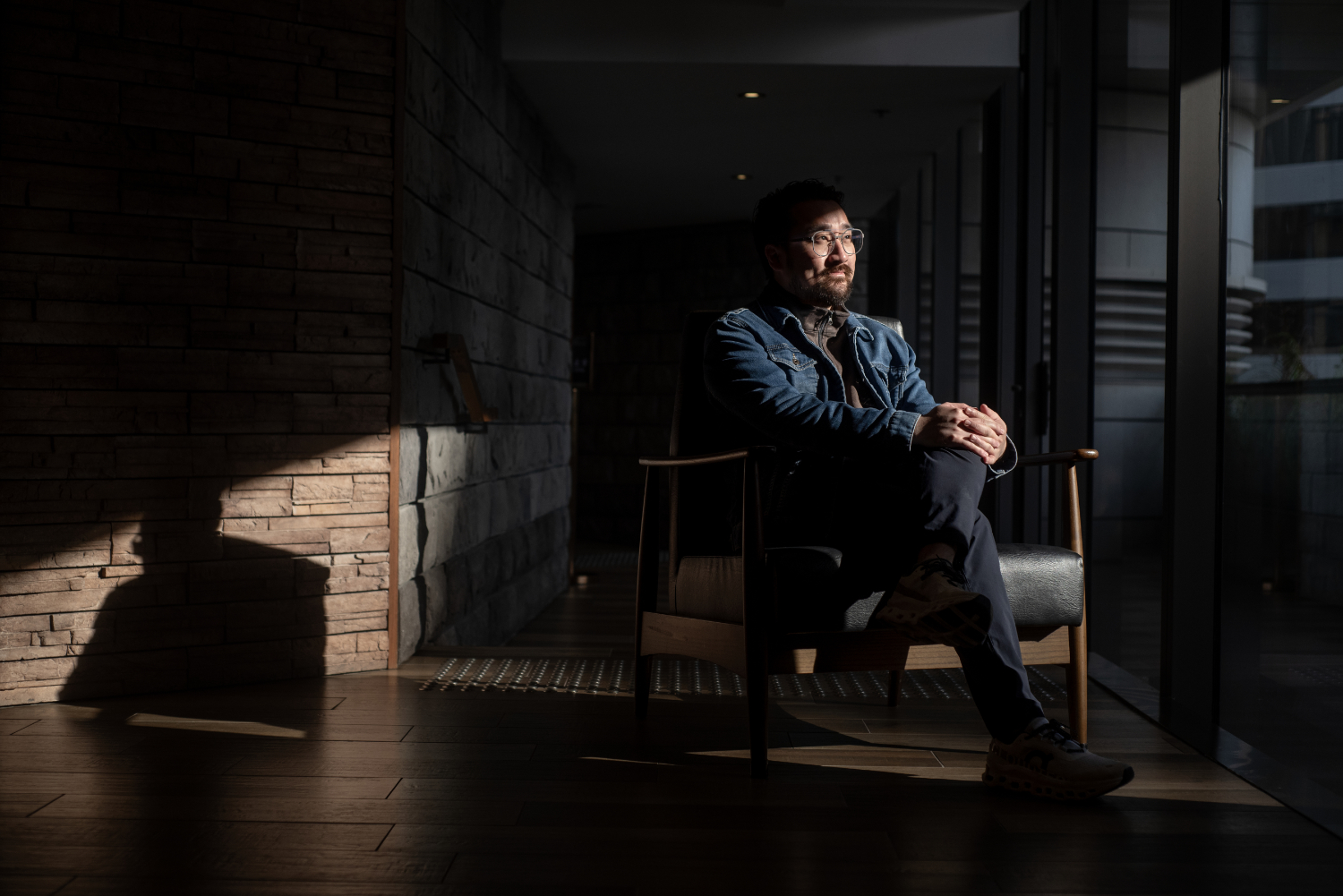
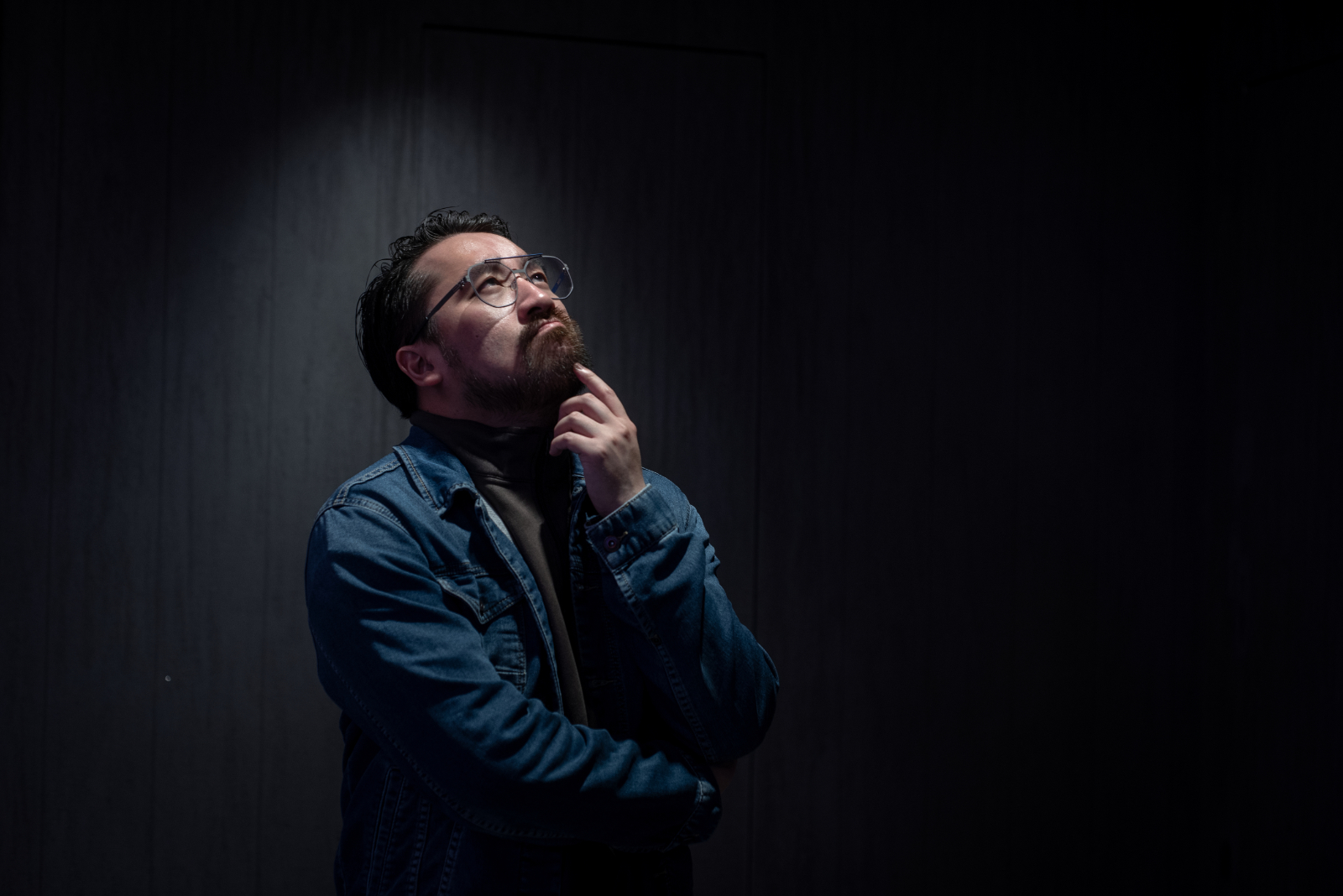
- Film director Keane Wong Tak-kin – Photo by Xiaomei Chen for Zolima CityMag
Imperfect people
One possible reading of Afterpiece is that Hannah, Tracy and Melinda exist to serve Owen’s ego — and are punished for challenging it. Wong disagrees: their resistance, he argues, is precisely the point.
“I don’t see it that way,” replies Wong. “I think this is about four characters who have quit living inauthentically. They’re not perfect people, and they couldn’t let go of their stubbornness, and they tightened their grips until they had to let go. I don’t see him as punishing them but audiences will have their views, and that’s great.”
Chau, Wu and Yuen’s scene together — among the film’s best — makes clear how much each character understands about her relationship with Owen. “I love your phrasing, that Angela is like your best friend’s sister,” says Wong, describing Yuen’s unexpected performance. “That’s exactly my wording in Chinese. You think she’s harmless, but I wanted her to be seen like she never has before. I actually started the script with her in mind.”
Yuen was the first to sign on, followed by Fung. Yee suggested Wu, who Wong says commands a room like few others, then Chau, whose persona is rooted in sex appeal and a certain type of urban toughness that Wong wanted to play against. “In this she’s more vulnerable. She can’t help herself with this guy and she’s done whatever she could. What’s special about Chrissie is you can see what her character is feeling in her eyes. I like that about her.” Wong pauses for a moment. “I couldn’t get over the energy they brought, particularly in the dressing room scene. I didn’t have much direction for them, because they really just got it.”
Which raises a question: How much of Wong is in Owen? “Not much,” Wong finishes with a laugh. “First of all, I’m not surrounded by ladies. I’ve been single for ages. A lot of my friends are actually older than me, so there’s a lot of them in him.”
More crucially, does Wong fear finding himself caught between art and commerce, a dilemma filmmakers have faced since cinema began? “I wouldn’t use the word fear. I prefer to see a problem as an opportunity to change for the better, so I’m okay with it. [Compromise] is not something I’m unaware of. I’ve known this ever since I stepped into the industry, so I’m ready for it.”
Afterpiece opened in Hong Kong cinemas on 12 November 2026.