


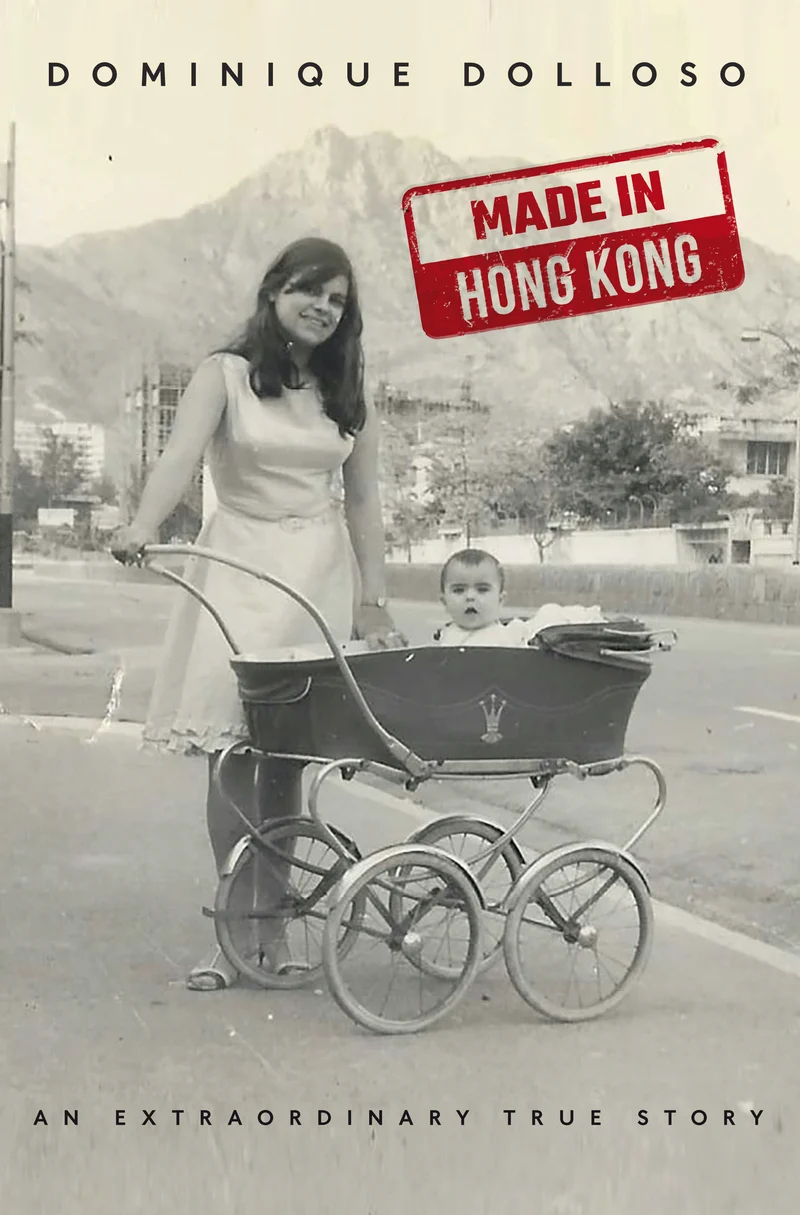
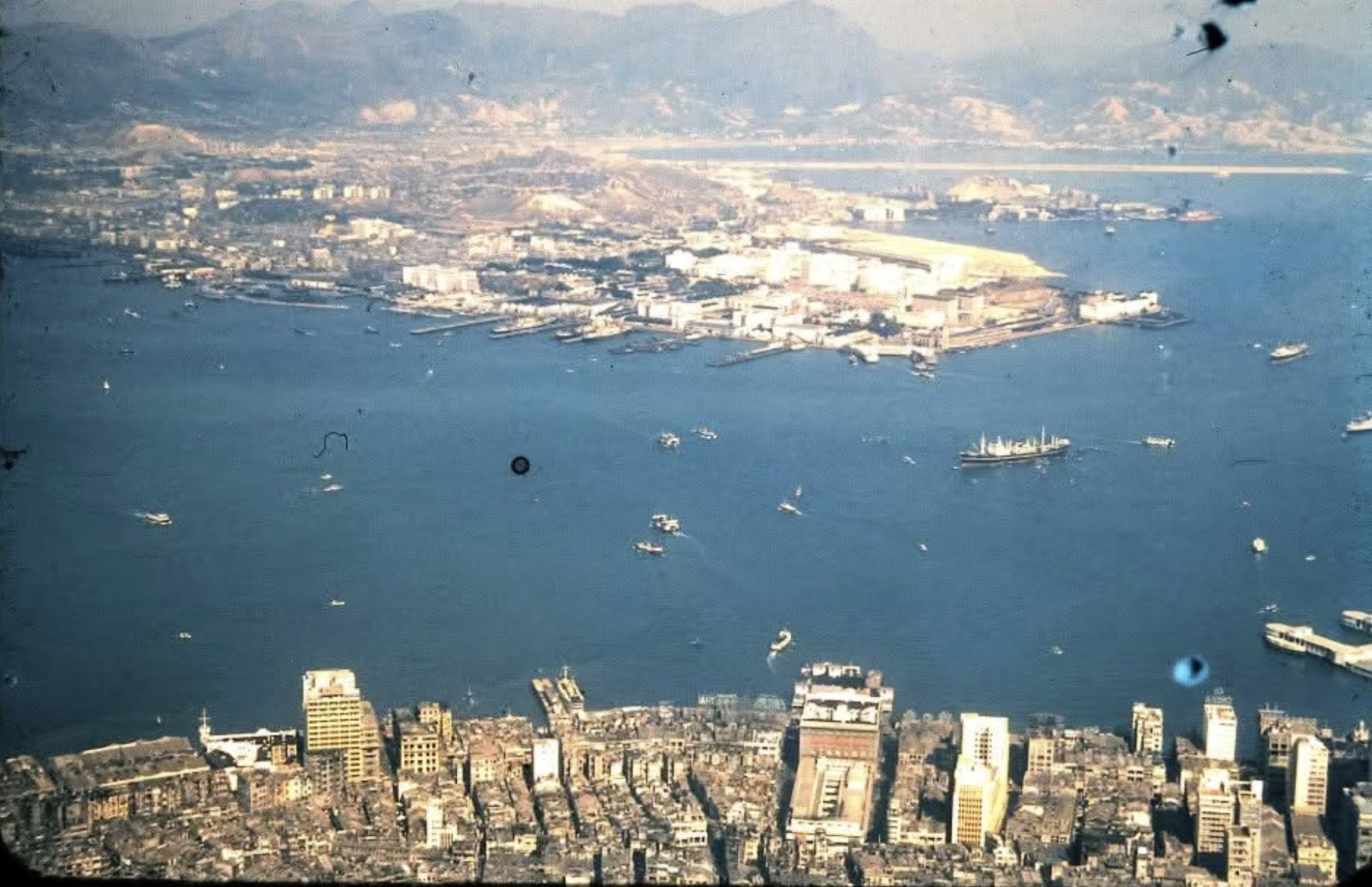
In the colonial Kowloon school that we attended, the name Dominique Dolloso was uttered with a mixture of scandal, titillation and awe. It was taken for granted that she would play almost continuous truant. It was understood that, as a 14 year old, she would have a ready supply of hashish when the rest of us drew a timid line at San Miguel. She was at this party, she was at that nightclub, she was roaming the streets all night, in hot pants and boob tube, cigarette dangling from lip, while everyone else was in bed at nine.
From there, the stories multiplied. Apparently she was living in a Tsim Sha Tsui tenement. Some saw her buying heroin in Kennedy Town. Later, after we graduated, the untamable Dominique was said to be working in a topless bar. Then she was fronting a band and gyrating on stage at a Lan Kwai Fong Street Carnival. In short, Dominique wasn’t simply feckless, boisterous and wild. She was downright intimidating — and the yardstick by which coolness was measured. You thought you were cool? Not compared to Dominique Dolloso, you weren’t.
Forty years later — on a video call from Brighton, England, where she now lives — we can laugh about it. But it’s all true. And it’s the subject of her new memoir, Made in Hong Kong. In it, Kowloon’s renegade daughter recalls a city of cramped flats, sleepless streets, music, struggle, drugs, nightlife and a very complicated belonging. Hers is a Hong Kong story that runs in anarchic counterpoint to the familiar colonial-era narratives of sunny poolsides and helpers in pinafores.
Making a place
The trajectory can be briefly summarised as follows. Dominique was born in Hong Kong in 1966 to Jenny — a white, 18-year-old unmarried mother — and initially raised by her and Jenny’s boyfriend, a 28-year-old Filipino guitarist called Rudy. At first, the three of them lived with Jenny’s parents, a well-off British couple, in a sprawling house in Kowloon Tong, but soon set up on their own in Universal Mansions, a drab apartment building on Hillwood Road. Their flat had a kitchen window through which “you could see a tiny square of sky,” Dominique writes. “If you looked down, it just went into darkness.”
Rudy left the family not long after, and was replaced by Jenny’s new boyfriend, who was tattooed, long-haired, Chinese and answered to the name Wolfman. He was a barman in a Tsim Sha Tsui hostess club called Kokusai, and Jenny began working there as the mamasan. Dominique and her sister Ali visited it frequently as children, and would also drop into Bottoms Up, the topless bar run by Jenny’s friend — and Hong Kong’s best known mamasan — Pat Sefton. “Apart from the boobies, it was just like any other bar we knew,” Dominique recalls.
The Dollosos were always short of money, and Dominique became acutely aware of the fact when she entered King George Vth School. In the late 1970s and 1980s, it was a place of deep social and racial stratification, and unforgiving for anybody who wasn’t affluent, academically gifted, sporty, blonde or preferably all of the above. “There were lots of ways people could look down on people” is how Dominique puts it.
Her response was to act up. At the age of 12, she guzzled so much booze at a YMCA disco that she had to be carted away in an ambulance. At 14, she smoked her first joint, on the Peak, in the company of “Den from Canada” and “one of Den’s long-haired friends.” At 15, she was smoking heroin with “Island School boys” who “knew all about these things.” Four years later, she was working in a topless bar alongside her mother. She also sang backing vocals for the band Afrozilia, gigging around town. “My main job in the band was to dance around and get the crowd going,” she remembers.
I’ve stood on the side of a stage and watched her do it. There was something touching about the way she could read the room: a girl who didn’t always know where she belonged making everyone else feel as though they did.
Dominique moved with the band to LA, became a party girl in London, and backpacked through Spain, Greece, Gambia, Ibiza, Costa Rica and Thailand, adrift on clouds of marijuana smoke. Then she cleaned up her act and became a yoga teacher, as well as a mother herself, before making a stunning discovery about her origins at the age of 51 — one I have promised not to divulge because it would be a plot spoiler. “Let people find out by reading my book,” she suggests, which is fine, because it’s Hong Kong and her early years that we want to talk about. The place is so hardwired into her that every chapter in Made in Hong Kong is dated according to the Chinese zodiac. Snorting coke to get her through the night shift at a London casino? That would have been the Year of the Metal Horse. Doing magic mushrooms on Mindoro? Of course: The Year of the Fire Tiger.
-
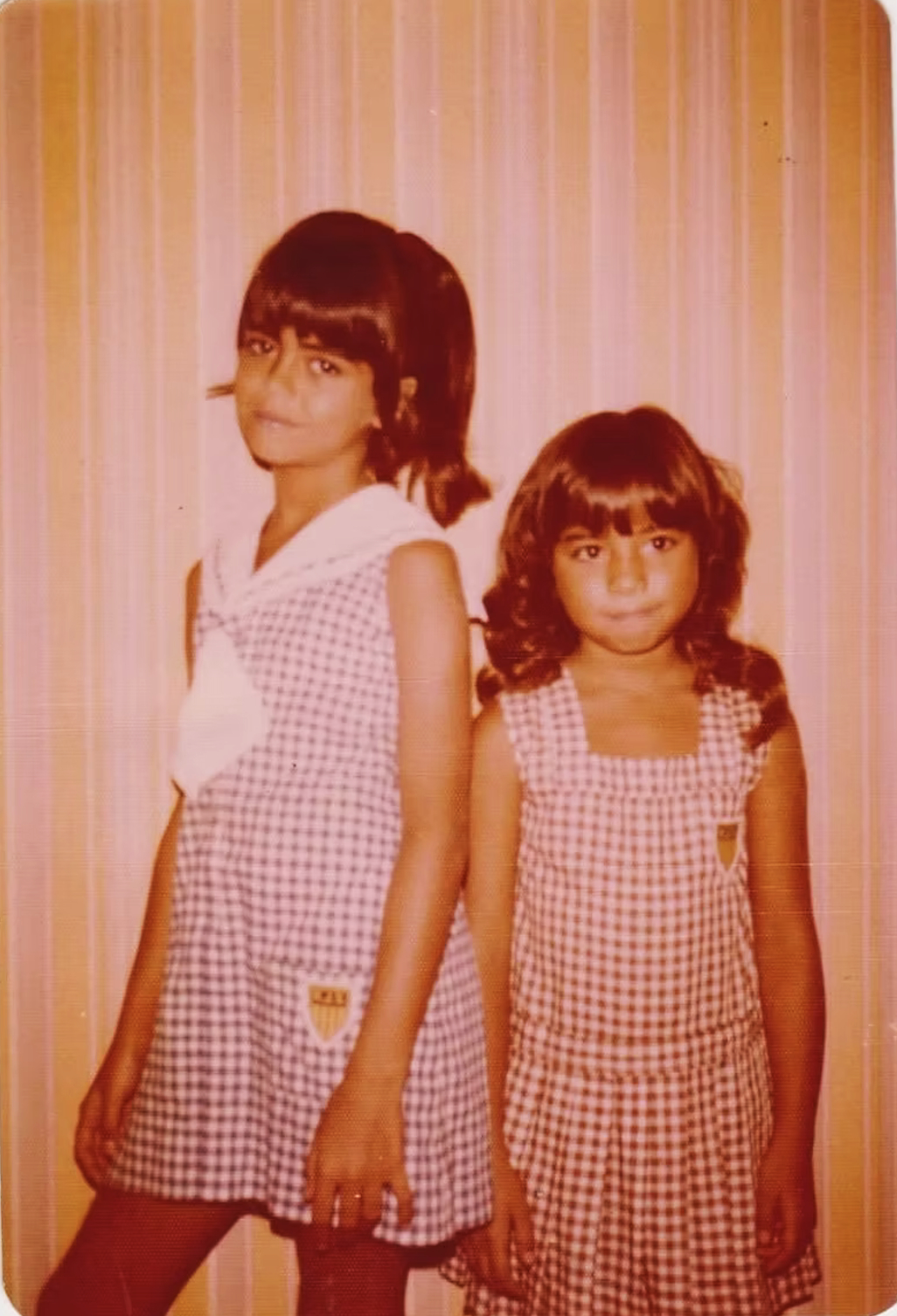
- Dominique Dolloso and her sister Ali, in Kowloon Junior School uniform, mid 1970s.
-
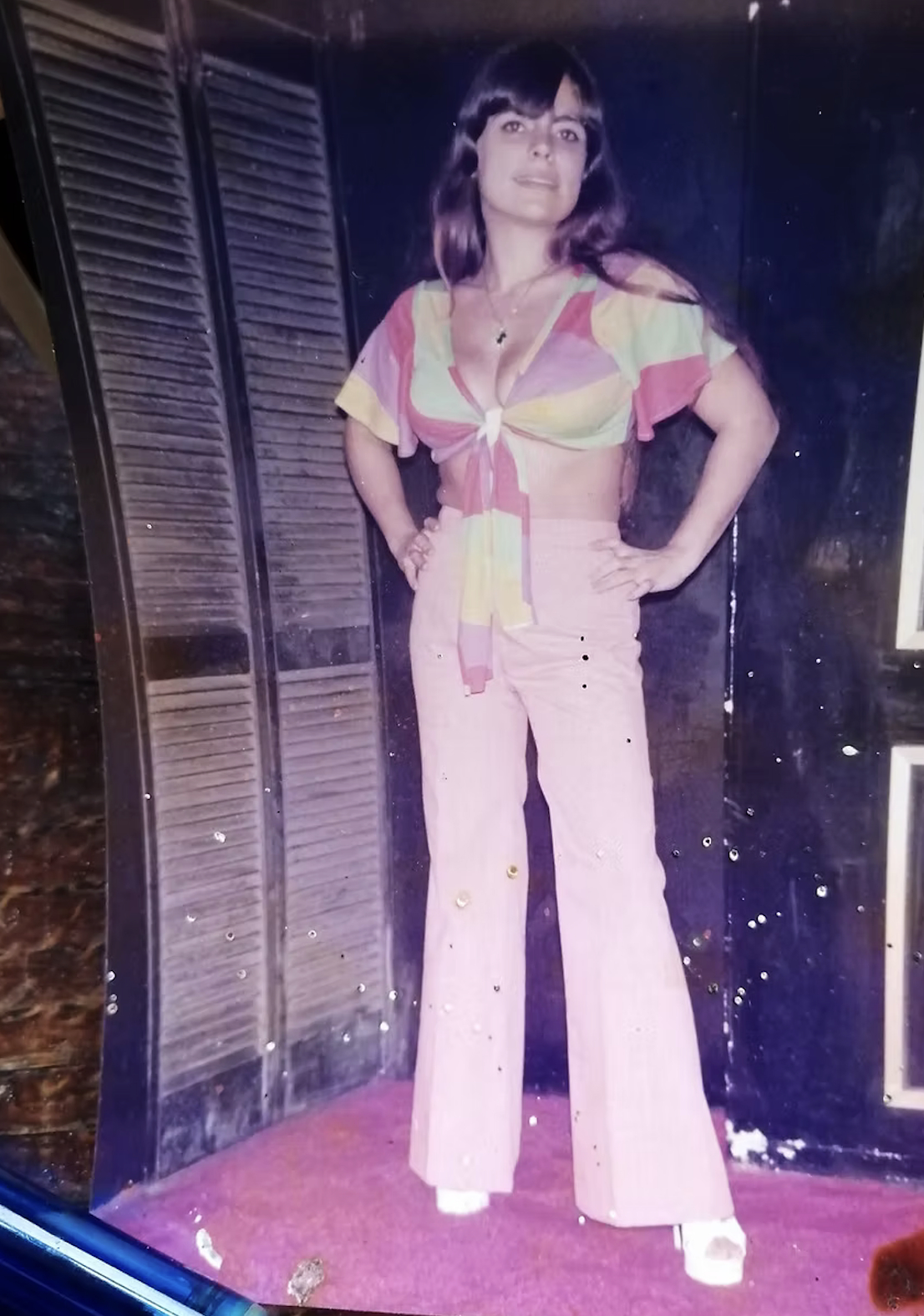
- Dolloso’s teenage years were shaped by music, rebellion and a yearning to belong.
-

- Dominique the bar girl, Kowloon, mid 1980s
Exhiliration and loneliness
When Dominique thinks of the Hong Kong of her childhood, she doesn’t begin with a skyline or a landmark, much less a fabulous day on the company junk or scones at the Peninsula. She remembers, instead, a density of raw sensation: Chinese and Indian voices through thin apartment walls; laundry and rubbish hanging from facing buildings; the appetising smell of street food mingling with the sourness of garbage; the intimate visibility of other people’s domestic lives. “Lots of people can live in a small space,” is one of the main takeaways from her childhood.
Her Hong Kong was grimy and vivid. “It was a real mishmash of the senses,” she says. “All smells and noises and everything, especially in Tsim Sha Tsui, which was very dirty.”
For the Hong Kong readers who might recognise their own childhood in breezy colonial villas and private clubs, Made in Hong Kong offers another version of the city. But it isn’t a simple hardship narrative. To be sure, Dominique’s memories are full of lack — of comfort, adult supervision and a conventional family structure — but they’re also suffused with colour, mischief, the companionship of other misfits and a deep attachment to the place that formed her. “I would never change it; it was a very, very rich childhood,” she says now. “We were all kind of just doing our thing, playing in the streets.”
At the same time, it is important not to romanticise the alcohol- and drug-fuelled misadventures of an unsupervised minor. Dominique recalls feeling “very safe” on the Kowloon streets at night, but that safety was not the same as feeling protected. Instead, she describes herself as “a bit feral,” a word that conveys both impetuousness and the absence of firm boundaries. There was exhilaration in this autonomy, she says, but also loneliness. “I had a lot of freedom and I did enjoy it. But then sometimes I wished I had a dad or someone there telling me, ‘No, you can’t do that.’” From time to time Jenny tried to discipline her, but their clashes often turned into explosive arguments, until, as Dominique puts it, “I think she gave up in the end and just let me do what I want.”
With neither family, school nor a wider community able to restrain her, Dominique lived life with premature intensity. “Sex and drugs and rock ‘n’ roll at an early age,” she shrugs, with a deep chuckle that does not erase the seriousness beneath it.
Yet the contrast between her life and those of our peers was not straightforward. Dominique longed for the apparent normality of their houses: “A mum in an apron and an apple pie in the oven,” as she puts it. But her friends, in turn, loved visiting her. Her mother was working; the flat was tiny but felt free; there was no need to stay indoors. They could spill out into the streets and roam.
“We were just all in the moment when we were hanging out together,” she says. As teenagers, she adds, friends rarely exchanged the deeper truths of their respective home lives. They were escaping them, or simply avoiding the scrutiny, in favour of music, substances, parties and the next place to go.
Questions of identity complicated the picture further. Through Rudy, she had fragments of connection with the Philippines: “A song here, a dish here, a few words.” She felt more pulled towards English culture, in part through Jenny and in part because it was the dominant aspiration among many young people in colonial Hong Kong, with music, fashion and magazines all arriving from Britain. At the same time, she was steeped in Chinese life: the language she could understand and speak, the food, the streets and the family structures around her.
“I was very confused as to where I fitted in,” she says. “I felt English, I felt Chinese as well, even though it wasn’t in my blood. I felt it was in my culture.”
Hong Kong, the best friend
Living in Chinese buildings also exposed her to the city’s everyday racial and class prejudices. People sometimes assumed that, because she did not look Chinese, she could not understand Cantonese. She could hear disparaging remarks about herself, as well as about Indian and Black people. She also saw condescension in more privileged white circles too, where Jenny’s nightlife work was both a source of embarrassment and fascination.
When Dominique became a topless barmaid herself, she initially found it “very nerve-wracking” and surreal, but within days it felt ordinary — and not, in her description, an experience of theatrical sexuality. The bar was called Adam’s Apple and Jenny was the manager. It resembled a sociable neighbourhood pub, except for the dress code: barmaids served drinks, talked with customers and played cards during quiet moments. Wealthier regulars might buy takeout for everyone. Dominique remembers the prevailing mood as convivial rather than lascivious.
“It always reminded me of Cheers, where everybody knows everybody, and everyone’s really friendly,” she says. “The difference was that the barmaids are topless.”
Working alongside her mother also changed their relationship. Having fled to her grandparents in England for a couple of years, Dominique returned to find things with Jenny on a more equal footing. She saw her mother as “very fair,” relaxed and “a really good boss.” Today, the connection has a touching generational echo: Dominique, her mother and Dominique’s daughter all work at the same Brighton casino, in different roles.
She has also come to a remarkable understanding about her teenage recklessness. Yes, there was heroin at 15, but while she saw others move towards injection, addiction and despair, she felt something in herself refuse to follow. “I’ve got something in me that pulls myself back,” she says. “I feel like I’m my own protector now.”
That self-protection, she believes, came from the very lack of restraint she experienced as a child: seeing what could happen, testing boundaries, observing havoc and eventually learning how not to disappear into it. She describes it as a form of self-parenting — something she did not recognise at the time, but can now describe.
In that sense, writing Made in Hong Kong was a kind of retrospective therapy. Memories arrived in waves: typhoons and shaking windows, the click of an abacus, particular smells and incidental details she had not consciously recalled in years. Dominique spent more than a year editing and adding to the manuscript as these fragments surfaced. She decided to be candid about drug-taking, rage, uncertainty and the emotional volatility of her younger self. “If I’m going to do this, I might as well really do it,” she says. “Put it all out there.”
For all the upheaval in her story, Hong Kong remains a place of deep attachment. Asked to characterise the city as if it were a person, Dominique pauses, then reaches for an unexpectedly tender answer: “A bestie.” It is, she says, somewhere she associates with fun, but also somewhere, ultimately, that she feels supported by.
And that’s the most revealing counterpoint in Made in Hong Kong. Dominique was an outsider in a city of stark hierarchies, a girl who inhabited both tenement corridors and colonial living rooms, bars and beaches, Chinese streets and English cultural longing. But she didn’t simply survive Hong Kong. In its mess, heat and freedom, she found a place that allowed her to become herself.